





What's Happening?
Andrew Wilkinson, who once earned $6 an hour as a barista, went on to design Slack and establish a billion-dollar holding company named Tiny without relying on venture capital. Wilkinson, a college dropout from Victoria, British Columbia, started his
journey with only $250. He secured his first client for $500 and subsequently founded MetaLab, initially operating as a solo freelancer but presenting himself as a team. This strategic positioning allowed MetaLab to generate $250,000 in revenue in its first year. A key advantage was charging Silicon Valley prices while paying Canadian wages, leading to significant profit margins that were reinvested. In 2013, Stewart Butterfield brought an early prototype of Slack to MetaLab, which then designed its logo, site, web app, and mobile app within six weeks. The design focused on creating a friendly user experience, distinguishing it from more corporate tools.
Why It's Important?
Wilkinson's story highlights the potential for significant entrepreneurial success through strategic positioning, geographic arbitrage, and a focus on user experience. His approach with MetaLab, charging premium rates while leveraging lower operational costs, demonstrates a model for maximizing profitability in the design and technology sectors. The emphasis on making Slack feel 'friendly' underscores the critical role of user-centric design in market adoption and brand loyalty, a lesson applicable across various industries. Furthermore, his decision to build Tiny by acquiring 'boring, profitable' businesses, rather than pursuing high-growth, venture-backed models, offers an alternative blueprint for wealth creation and long-term stability, contrasting with the often volatile tech startup landscape. This strategy could influence how aspiring entrepreneurs and investors evaluate business opportunities, prioritizing cash flow and independent operations over rapid scaling.
What's Next?
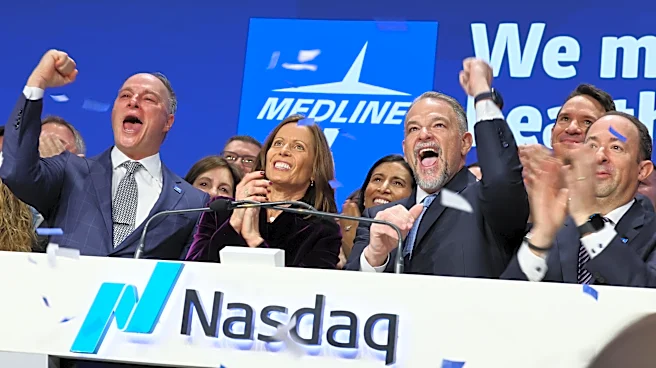
Wilkinson's company, Tiny, went public, but its stock later dropped by nearly 50%. Following this, Andrew Wilkinson stepped down as CEO, bringing in an operator to manage the company. This move reflects his self-assessment as a 'starter and a deal-maker' rather than someone who enjoys managing the 'messy middle' of ongoing operations. This transition suggests a continued focus on deal-making and strategic acquisitions for Tiny, with a new leadership structure in place to manage the existing portfolio. The company's future trajectory will likely involve further acquisitions of profitable businesses, adhering to Wilkinson's philosophy of building wealth through stable, cash-flowing enterprises. The impact of the new operator on Tiny's public performance and acquisition strategy will be a key area to observe.
Beyond the Headlines
Wilkinson's journey from a barista to a billionaire CEO offers a compelling narrative about the power of self-education, strategic branding, and unconventional business models. His initial act of buying a web design book after observing web designers in his coffee shop illustrates a proactive approach to skill acquisition and career change. The creation of MetaLab, where he presented himself as a team before one existed, highlights the psychological impact of branding and perception in securing clients. His philosophy of building 'boring businesses' for long-term wealth, inspired by figures like Warren Buffett, challenges the prevailing Silicon Valley narrative of rapid growth and venture capital dependence. This approach suggests a more sustainable and less volatile path to success, emphasizing cash flow and independent operations, which could inspire a shift in entrepreneurial thinking towards more traditional, value-driven business practices.