

What's Happening?
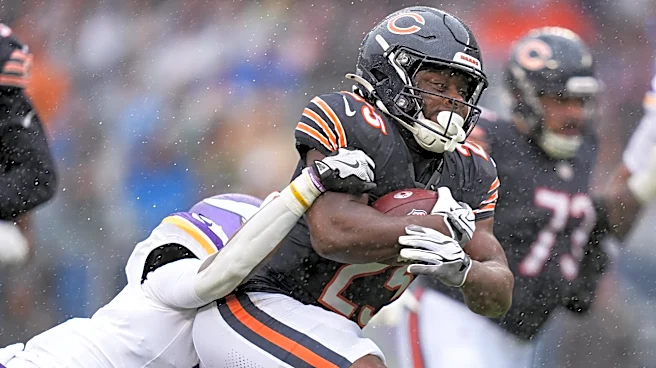
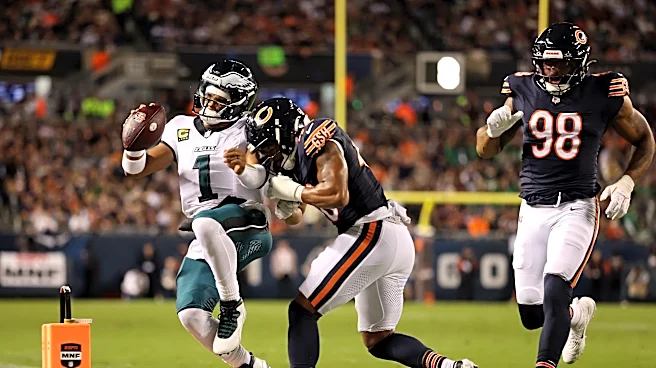
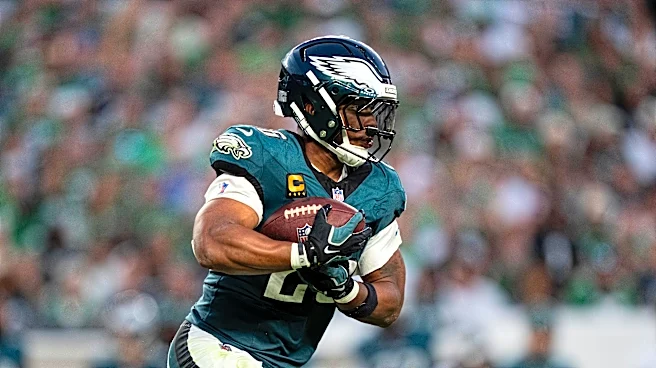
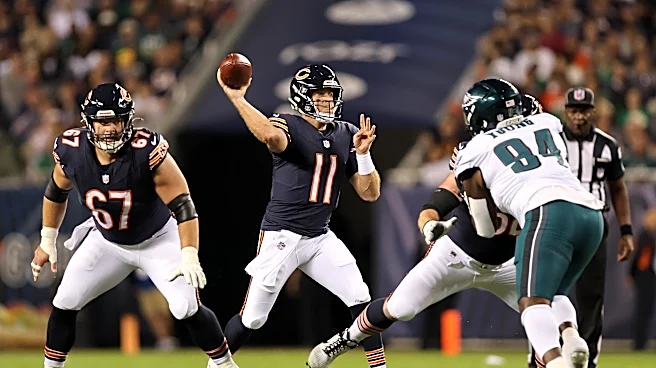
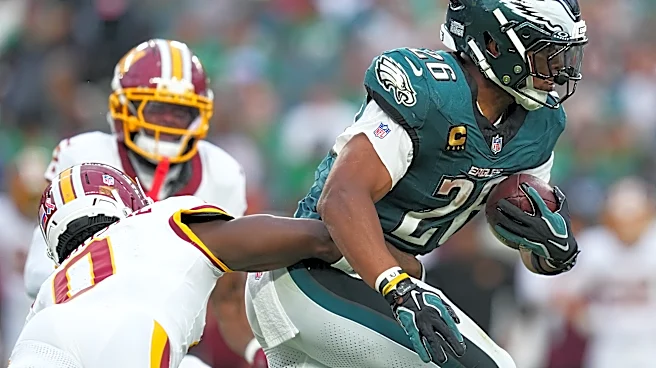
The Philadelphia Eagles' running game, led by Saquon Barkley, experienced a significant drop-off in the second half of their Week 3 loss to the Chicago Bears. Barkley, who had a strong first half with 11 carries for 73 yards, managed only four carries for nine
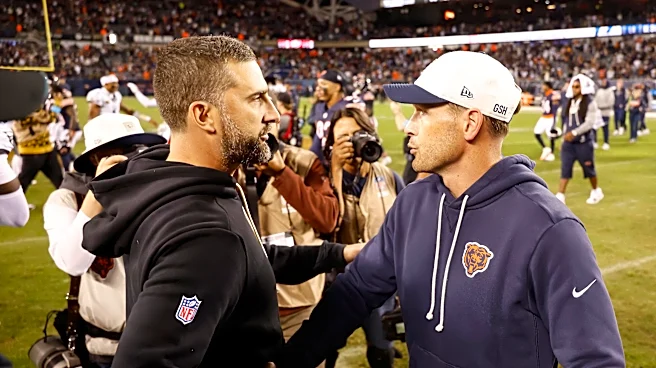
yards after halftime. This pattern of the running game fizzling out in the second half has been a recurring issue for the Eagles this season. Barkley's average yards per carry before halftime is 6.5, ranking second among running backs with at least 10 first-half carries, but it plummets to 2.9 yards per carry in the second half, placing him 38th among 43 running backs with similar second-half carries. The team's struggles on first-down runs in the second half and penalties are cited as contributing factors to this decline. Head coach Nick Sirianni acknowledged the need to avoid negative plays and stay on schedule offensively.
Why It's Important?
The inconsistent performance of the Eagles' running game has significant implications for their offensive strategy and overall success in the NFL. A strong running game is crucial for controlling the clock, setting up play-action passes, and wearing down opposing defenses. When the run game disappears in the second half, it puts more pressure on the passing game and can lead to predictable offensive schemes. This issue could impact the team's ability to close out games, especially against strong defensive opponents. For Saquon Barkley, a key offseason acquisition, his inability to maintain production throughout an entire game raises questions about the offensive line's consistency and the play-calling in the latter stages of games. The Eagles' ability to address this will be vital for their playoff aspirations and overall competitiveness in the league.
What's Next?
The Eagles face a short week, requiring them to quickly address the issues plaguing their second-half running game. Saquon Barkley emphasized the need for accountability and honesty among the team members when reviewing film and discussing their performance. The coaching staff will likely focus on improving first-down efficiency in the second half and minimizing penalties that put the offense behind schedule. Adjustments to play-calling and offensive line schemes may be necessary to ensure sustained production from the running game. The team's ability to adapt and find solutions in the coming weeks will be closely watched, as consistent offensive output is essential for their success in the competitive NFL season. Their next game will be a crucial test of these adjustments.
Beyond the Headlines
The Eagles' running game struggles highlight a broader challenge in professional football: maintaining offensive rhythm and effectiveness for an entire 60-minute game. This isn't just about individual player performance but also about coaching adjustments, offensive line cohesion, and the mental fortitude of the team. The disparity in Barkley's first-half versus second-half production could indicate that opposing defenses are making effective halftime adjustments, or that the Eagles' offensive scheme becomes less effective as the game progresses. This situation could also impact player confidence and team morale if not addressed effectively. The long-term implications could include changes in personnel, coaching staff, or a fundamental shift in offensive philosophy if the problem persists, affecting the team's competitive standing and fan engagement.