

What's Happening?
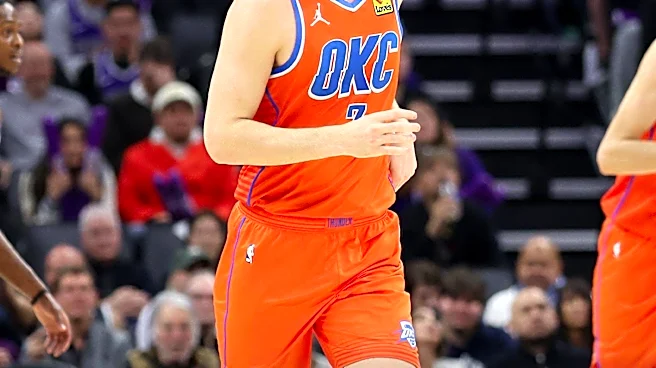
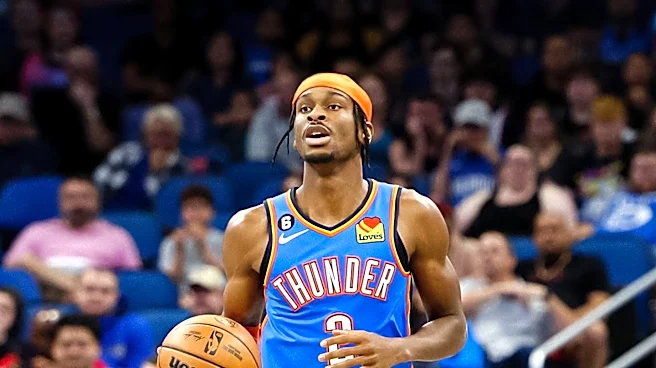
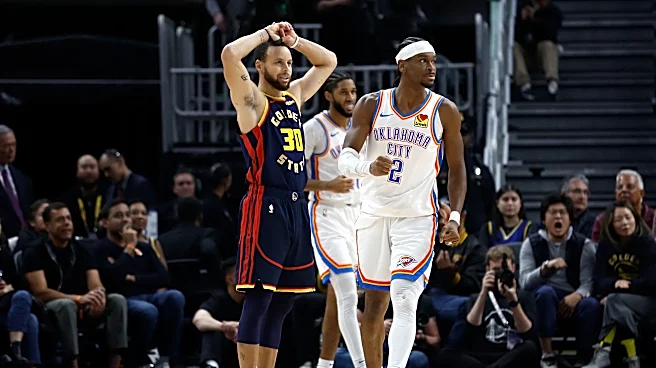
The Oklahoma City Thunder, a prominent NBA team, is facing significant financial decisions following a successful period marked by a championship win in 2025 and consistent high performance. The team has managed to avoid luxury tax payments since the
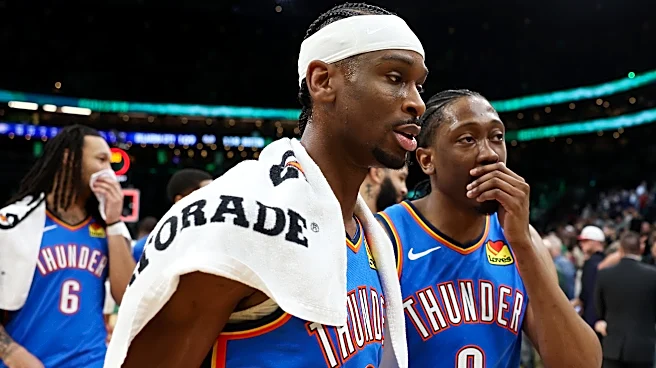
2019-20 season, but this is set to change with the upcoming 2026-27 campaign. The Thunder's management, led by top executive Sam Presti, has strategically reduced the team's luxury tax bill by $240 million while acquiring future draft picks. This move was financially motivated, as confirmed by Presti, and aims to prepare the team for future financial commitments, including the supermax contract of star player Shai Gilgeous-Alexander and rookie max contracts for Jalen Williams and Chet Holmgren. The Thunder's ownership is now under pressure to maintain the team's competitive edge by investing in its roster.
Why It's Important?
The financial strategy of the Oklahoma City Thunder is crucial as it highlights the challenges NBA teams face in balancing competitiveness with financial sustainability. The Thunder's ability to avoid luxury tax payments while achieving high performance sets a precedent for other teams. However, with impending financial commitments, the ownership's willingness to invest in the team's future will be pivotal. This situation underscores the broader economic dynamics within the NBA, where teams must navigate salary caps and luxury taxes to retain top talent and remain competitive. The Thunder's approach could influence other franchises facing similar financial pressures.
What's Next?
The Thunder's ownership will need to decide whether to continue investing in the team's roster to maintain its competitive status. With key players like Shai Gilgeous-Alexander, Jalen Williams, and Chet Holmgren requiring significant financial commitments, the ownership's decisions will impact the team's future success. The NBA's upcoming expansion and new TV deals may provide additional revenue streams, potentially easing financial pressures. However, the ownership's willingness to pay luxury taxes will be a critical factor in the team's ability to retain its core players and continue its success.