






What's Happening?
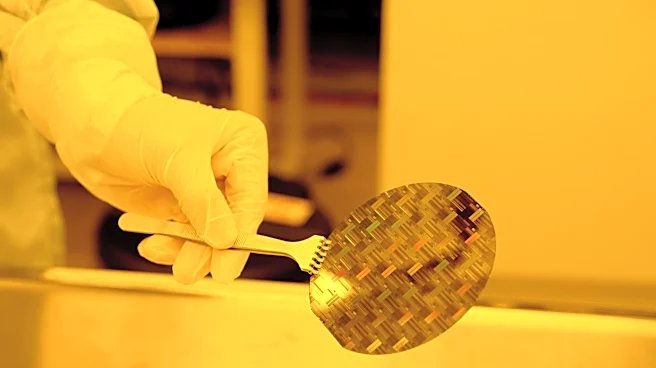
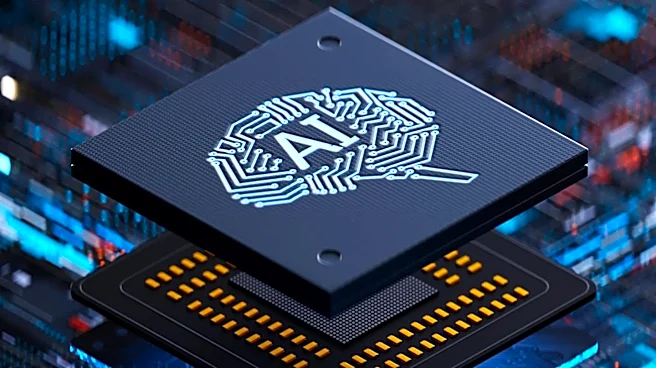
ASML, a Dutch company, holds a unique and critical position in the global semiconductor industry as the sole commercial supplier of extreme ultraviolet (EUV) lithography equipment. This specialized equipment is essential for manufacturing the most advanced
semiconductors, including those used in AI data centers. Despite the prominence of companies like Nvidia and Micron in AI chip design and memory, their success is ultimately dependent on ASML's technology. The company recently reported record third-quarter revenue, with its gross margin climbing to 57.5%. Management has indicated that its planned production capacity for 2027 and 2028 will not meet customer demand, highlighting the immense and growing need for its equipment. Customers are already looking to place orders for deliveries as far out as 2029 and 2030, prompting ASML to explore ways to expand its manufacturing capacity beyond current plans.
Why It's Important?
ASML's monopolistic control over EUV lithography technology represents a significant bottleneck in the global supply chain for advanced AI chips. This dominance means that the pace of innovation and production for cutting-edge AI hardware, crucial for U.S. technological leadership and economic growth, is heavily reliant on a single foreign company. Any disruptions to ASML's operations, or limitations in its production capacity, could have far-reaching consequences for U.S. tech giants like Intel, Samsung (which has significant U.S. operations), and other chipmakers that depend on its equipment. The fact that demand is already outpacing ASML's planned production capacity underscores the intense global competition for advanced semiconductor manufacturing capabilities, which is a key strategic concern for the U.S. in its efforts to secure its supply chains and maintain technological superiority in AI.
What's Next?
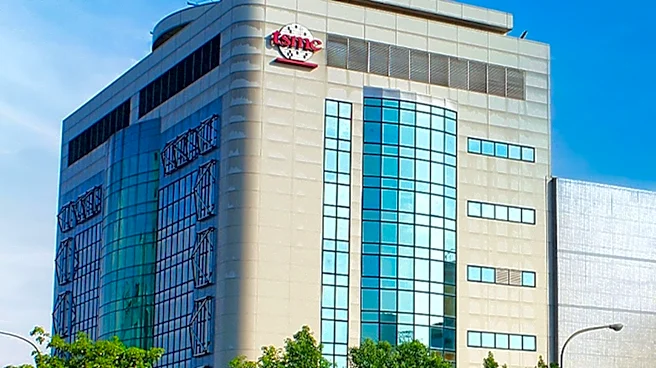
ASML's continued efforts to expand its manufacturing capacity will be crucial for meeting the escalating global demand for advanced semiconductors. The company's ability to scale up production will directly impact the timelines for chipmakers to introduce next-generation AI processors and other high-tech components. The ongoing collaboration between ASML and major chipmakers like Intel, Samsung, and Taiwan Semiconductor Manufacturing on future lithography technologies, such as High-NA EUV, will dictate the trajectory of semiconductor advancement. As customers place orders years in advance, ASML's long-term order book will provide a strong indicator of future trends in the AI and semiconductor industries. The U.S. and other nations will likely continue to monitor ASML's capacity and technological developments closely, given its pivotal role in the global tech ecosystem.
Beyond the Headlines
ASML's unique position highlights a broader geopolitical and economic vulnerability for nations heavily reliant on advanced technology. The concentration of such critical manufacturing technology in a single company, located outside the U.S., raises questions about supply chain resilience and national security. This situation could spur increased investment in domestic semiconductor manufacturing capabilities within the U.S., as seen with initiatives like the CHIPS Act, to reduce dependence on foreign suppliers for essential components. Furthermore, ASML's technological monopoly underscores the immense value of specialized intellectual property and the challenges of replicating decades of research and development. This scenario could also lead to increased international cooperation or competition in developing alternative lithography technologies, though ASML's lead appears substantial for the foreseeable future.