


What's Happening?
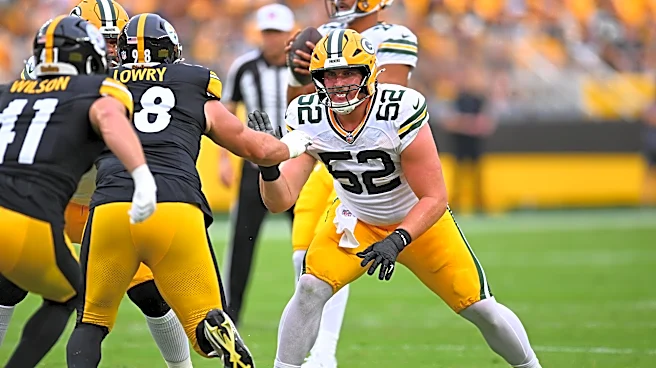
The Green Bay Packers' long-standing approach to offensive line versatility, championed by head coach Matt LaFleur, is facing increasing scrutiny. This strategy involves frequently moving offensive linemen between guard and tackle positions, aiming to field
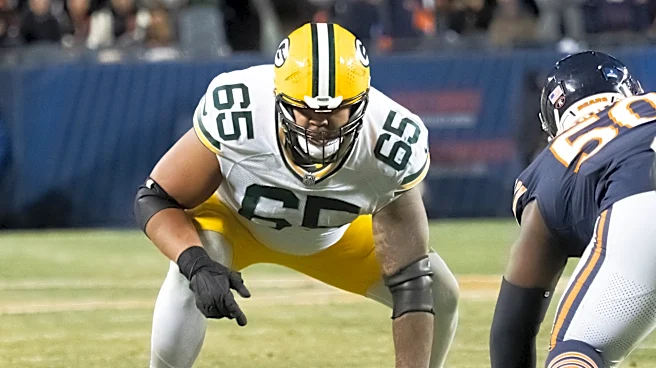
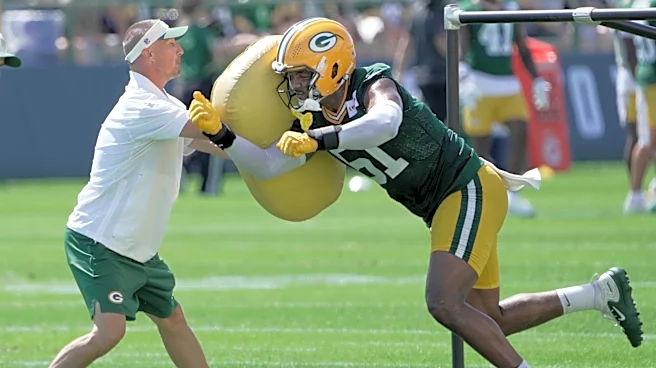
the 'best five' players regardless of their natural position. While this method has yielded success in the past, particularly in LaFleur's early years, recent player development issues are raising questions. The article highlights the case of Anthony Belton, who, like Jordan Morgan before him, is being moved between tackle and guard. This constant positional shifting is perceived by some as hindering Belton's development, making him a liability at both positions rather than fostering expertise in one. The team's intention to develop Belton as a swing tackle and potentially a starting right guard appears to have backfired, leading to concerns that his progress is being stunted by the lack of a consistent role.
Why It's Important?
This situation is important for the Green Bay Packers as it directly impacts the team's offensive line stability and future performance. A strong offensive line is crucial for protecting the quarterback and establishing a successful running game, both of which are foundational to offensive success in the NFL. If the current strategy of prioritizing versatility over positional consistency continues to hinder player development, it could lead to a less effective and less cohesive offensive line. This could, in turn, negatively affect the performance of key offensive players, including the quarterback. The long-term implications involve potential missed opportunities in developing promising young talent and a possible need to re-evaluate coaching philosophies regarding offensive line management. For fans and stakeholders, it raises questions about the team's ability to maximize its draft capital and ensure player growth, which are vital for sustained competitiveness.
What's Next?
The immediate future for Anthony Belton and the Packers' offensive line will likely involve continued observation during upcoming practices and preseason games. The coaching staff will need to assess whether Belton can adapt to a more defined role or if the current strategy will persist. There may be internal discussions within the coaching staff about the effectiveness of their 'versatility-as-ultimate-goal' approach, especially if other players show similar developmental struggles. If Belton's performance does not improve, the team might be forced to reconsider his role or explore other options for offensive line depth and starting positions. The situation could also influence future draft strategies, potentially leading the Packers to prioritize players with more defined positional strengths or to adjust their development plans for incoming linemen to ensure more consistent growth.
Beyond the Headlines
Beyond the immediate concerns for Anthony Belton, this situation highlights a broader philosophical debate within professional sports regarding player development versus strategic flexibility. While versatility is often valued, the article suggests there's a point where excessive positional movement can become detrimental, particularly for younger players who need to master a specific role. This raises ethical questions about player welfare and optimal development pathways. The long-term implications could see a shift in how NFL teams approach offensive line coaching, potentially favoring more specialized training in early career stages before introducing broader versatility. It also underscores the challenge for coaches to balance immediate team needs with the long-term growth of individual players, a dynamic that can significantly impact a franchise's sustained success and player retention.