
What's Happening?
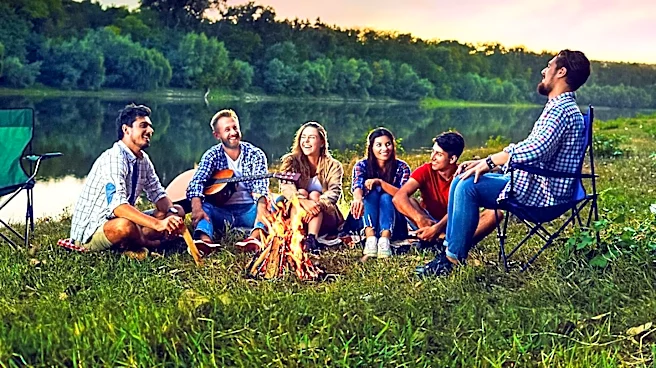
Adult summer camps are becoming increasingly popular in the U.S., offering grown-ups a chance to relive childhood camp experiences. These camps, such as Camp Rewind in the East Kootenays region of British
Columbia, cater to adults looking to simplify their lives and make new connections. Activities include traditional camp games and crafts, providing a nostalgic escape from daily responsibilities. The trend is reflected in a significant increase in searches for adult summer camps in the U.S., with a 300% rise reported by Yelp. Participants, like Matt Cullen, a content creator from Los Angeles, find these camps a valuable opportunity to disconnect from technology and engage with others in a meaningful way.
Why It's Important?
The rise of adult summer camps highlights a growing need for social connection and stress relief among adults. In a world where digital interactions often replace face-to-face communication, these camps offer a rare chance for adults to engage in play and form genuine relationships. This trend also underscores a shift in societal attitudes towards adult leisure activities, recognizing the importance of play for mental health and well-being. As adults increasingly seek out these experiences, it could lead to a broader acceptance of adult play as a legitimate and beneficial pursuit.
What's Next?
As the popularity of adult summer camps continues to grow, more camps may emerge to cater to diverse interests and demographics. This could include specialized camps focusing on specific hobbies or communities, such as those for the 2SLGBTQ+ community or racialized groups. The trend may also inspire traditional summer camps to expand their offerings to include adult sessions, further blurring the lines between childhood and adult leisure activities. Additionally, the success of these camps could encourage other industries to explore similar models of adult engagement and recreation.
Beyond the Headlines
The increasing interest in adult summer camps reflects broader cultural shifts towards valuing mental health and work-life balance. As more adults seek out these experiences, it may challenge traditional notions of adulthood, which often prioritize productivity over leisure. This could lead to a reevaluation of how society views adult play and its role in personal development. Furthermore, the trend highlights the potential for community-building in a digital age, where in-person interactions are becoming more cherished and rare.