







What's Happening?
ON Semiconductor, a U.S. chipmaker headquartered in Scottsdale, Arizona, has canceled a planned expansion in the Czech Republic that was valued at up to $2 billion. This decision, made in conjunction with the Czech Industry Ministry, would have significantly
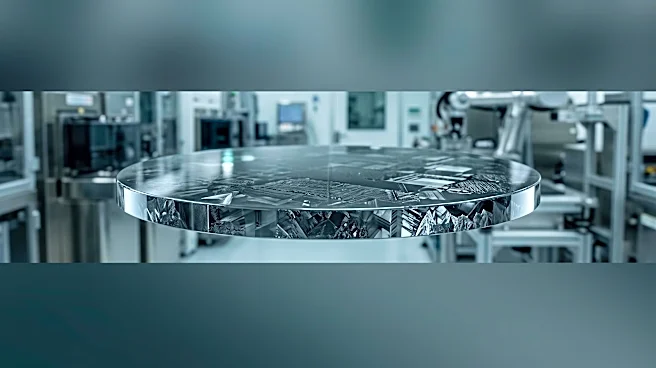
expanded silicon carbide production at the company's existing facility in Roznov pod Radhostem. The initial plan, announced in 2024, envisioned a vertically integrated campus covering all stages of silicon carbide production, from crystal growth to completed power semiconductors. However, ON Semiconductor stated on Friday, November 6, 2026, that changes in the global market for silicon carbide and the project's economics since its 2024 announcement led to the decision to halt the expansion. Despite this cancellation, current manufacturing operations in Roznov, which include both silicon and silicon carbide production, will remain unaffected and continue to be an integral part of ON Semiconductor's global network.
Why It's Important?
This decision by ON Semiconductor highlights the dynamic and rapidly evolving nature of the global semiconductor market, particularly concerning specialized materials like silicon carbide. The cancellation of a $2 billion expansion project underscores how quickly market conditions and economic viability can shift, even for major players in the industry. For the U.S. semiconductor industry, this move reflects a strategic re-evaluation of investment priorities and capacity discipline in response to changing demand forecasts and technological advancements. While the specific expansion was international, the underlying reasons—global market shifts and project economics—are critical considerations for all semiconductor manufacturers, including those with U.S. operations. The company's continued investment and hiring in its existing Czech sites, driven by anticipated demand from automotive, industrial, and AI data center sectors, indicates a focus on areas with strong growth potential, which could influence future investment strategies within the U.S. as well.
What's Next?
While the large-scale expansion in the Czech Republic has been halted, ON Semiconductor plans to continue investing and hiring across its existing Czech locations. The company anticipates sustained demand from key sectors such as automotive, industrial applications, and data centers, particularly those driven by artificial intelligence. This suggests a strategic pivot towards optimizing current assets and focusing on market segments with robust growth. For investors, this signals a move towards capacity discipline in a changing silicon carbide landscape. The company's emphasis on AI-driven demand in its core markets indicates where future investments and technological developments are likely to be concentrated, potentially influencing its U.S. operations and research efforts. The broader semiconductor industry will likely observe how ON Semiconductor's adjusted strategy impacts its competitive position and market share in these critical areas.
Beyond the Headlines
The decision by ON Semiconductor to cancel a significant expansion project, despite its initial strategic importance, reveals the inherent risks and complexities in long-term capital investments within the high-tech manufacturing sector. The rapid pace of technological change, particularly in areas like AI and vehicle electrification, can quickly alter market dynamics and render previous projections obsolete. This situation underscores the need for agility and adaptability in corporate strategy, where companies must continuously assess and re-evaluate large-scale projects against evolving global economic and technological landscapes. The focus on 'capacity discipline' amidst changing backdrops suggests a more cautious approach to expansion, prioritizing efficiency and responsiveness over sheer scale. This could lead to a broader trend within the semiconductor industry of more flexible manufacturing strategies and a greater emphasis on existing infrastructure optimization, potentially impacting how future U.S.-based semiconductor facilities are planned and developed.