




What's Happening?
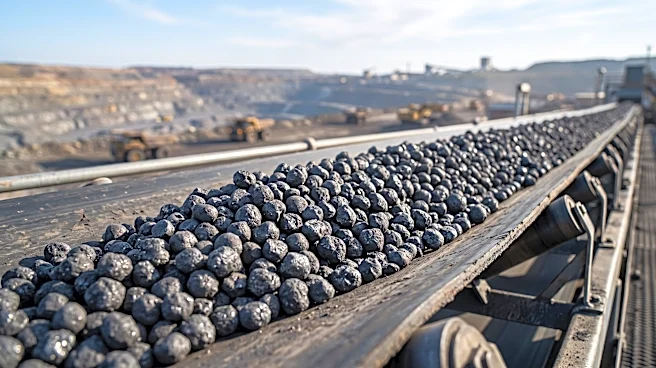
Champion Iron (TSE:CIA) reported mixed financial results for the second quarter of fiscal year 2027, with production reaching approximately 3.9 million tonnes and sales just under 4.5 million tonnes. Quarterly revenue stood at approximately C$400 million,
and adjusted EBITDA was C$23 million. The company ended the quarter with C$267 million in cash and access to roughly C$800 million in cash and undrawn loans, following an amendment to its senior secured credit facility covenants to provide greater flexibility. Despite major shutdowns at its Bloom Lake operation, mine operations remained healthy, with a strip ratio of about 1.2 and a head grade of roughly 30%. Rana Gruber, another of Champion Iron's operations, saw a strong rebound with production up 40% and sales up 180% from the previous quarter, contributing to a reduction in all-in sustaining costs to about C$97 per tonne. The company also highlighted lower freight costs and improving logistics, with the direct reduction pellet feed (DRPF) flotation plant at Bloom Lake on track for full commercial production by the end of fiscal 2027.
Why It's Important?
Champion Iron's Q2 performance and strategic shift are significant for the iron ore market, particularly for high-grade product segments. The company's focus on high-grade markets, moving away from a primary reliance on China, reflects a broader industry trend towards specialized, higher-value iron ore products. The successful commissioning of the DRPF flotation plant and the ability to secure premiums for its high-grade material indicate a strong position in markets like Europe, North Africa, the Middle East, and Oman. This strategy aims to capitalize on rising direct-reduction pellet premiums, which have increased from approximately US$40 per tonne to nearly US$60 per tonne over the past year. The amendment of financial covenants provides Champion Iron with crucial liquidity and flexibility, mitigating risks associated with market volatility. The improved performance at Rana Gruber and reduced freight costs further bolster the company's financial health and operational efficiency, positioning it to better navigate global economic shifts and demand for sustainable steel production inputs.
What's Next?
Champion Iron anticipates reaching full commercial production at its DRPF flotation plant by the end of fiscal year 2027, which is expected to further enhance its high-grade iron ore offerings and market penetration in Europe, North Africa, the Middle East, and Oman. The company plans to continue securing test cargoes and commercial agreements for DRPF material in the third and fourth quarters. Management expects to further reduce costs at Rana Gruber, mirroring efforts at Bloom Lake. The company's strategy involves reducing exposure to sales in China and expanding deliveries to regions with high demand for premium iron ore. Chairman Michael O'Keeffe noted that contracts for 2027 shipments to China could potentially be priced in the C$20s, indicating a potential for continued freight cost reductions. The ongoing optimization of logistics, including rail, port, and set-down-area operations, supported by government initiatives for Canadian high-grade iron ore, is expected to improve future logistics capacity and overall operational efficiency.