




What's Happening?
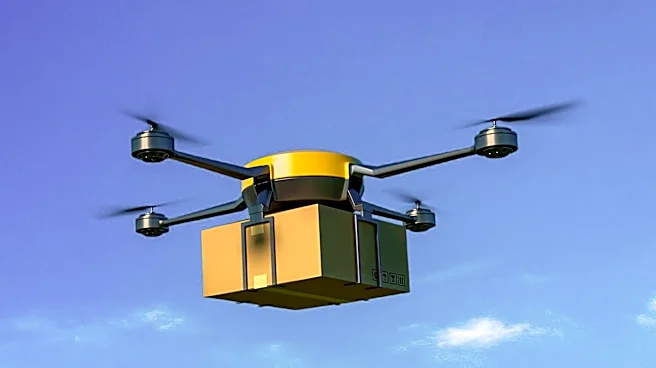
Amazon's Prime Air drone delivery service officially launched on November 17, 2026, from its Etna fulfillment center in central Ohio. This new service allows customers within a 7.5-mile radius in areas such as Pickerington, Reynoldsburg, and Pataskala
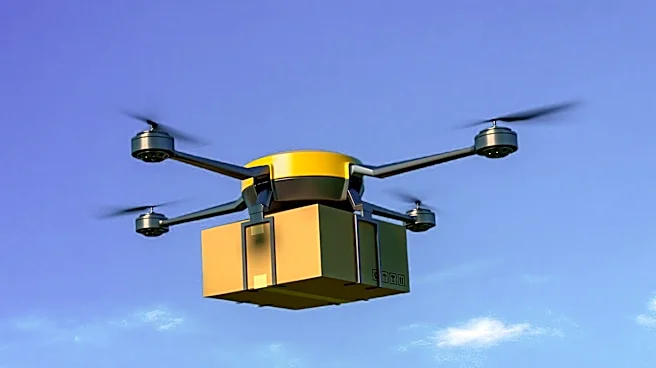
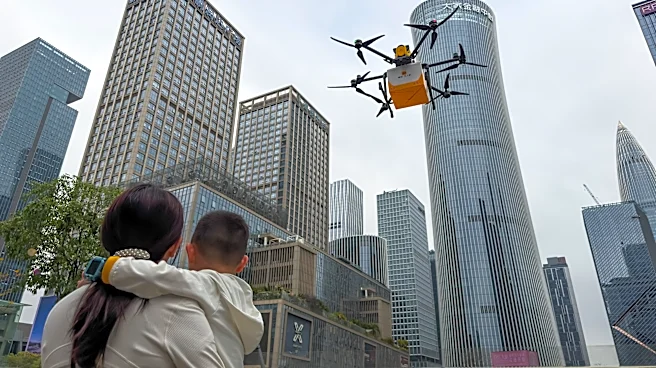
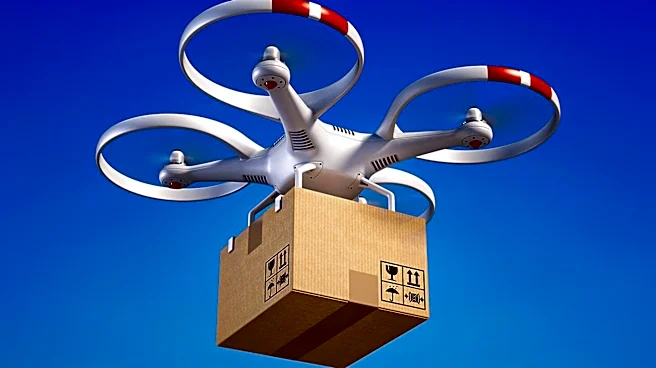
to receive packages via drone in 30 minutes or less. Amazon markets Prime Air as its fastest delivery option, enabling drones to deliver eligible packages weighing up to five pounds to a customer-selected drop-off spot, such as a front yard, backyard, or driveway. The drones, weighing 83 pounds, can achieve speeds of up to 74 miles per hour. Customers must specifically select drone delivery at checkout, and they also have the option to block drone deliveries to their address through Amazon's customer service. The Etna center is one of several drone facilities Amazon is establishing, including those in North Randall and Rossford, as part of a broader initiative to expand drone delivery to nearly 500 U.S. communities by the end of 2026.
Why It's Important?
The launch of Amazon's Prime Air service in central Ohio signifies a significant advancement in last-mile delivery logistics, potentially reshaping consumer expectations for speed and convenience. For U.S. consumers, this service offers unprecedented delivery times, which could become a competitive differentiator in the e-commerce market. However, it also raises concerns among some residents regarding privacy and surveillance, as drones use cameras and sensors for navigation, though Amazon states no live feeds are monitored and no audio is recorded. The expansion of drone delivery could also impact traditional delivery services and employment in the logistics sector, potentially shifting demand towards automated solutions. Furthermore, safety is a critical concern, highlighted by a recent incident in Michigan where an Amazon drone crashed after hitting utility lines, prompting investigations by the Federal Aviation Administration and the National Transportation Safety Board. This incident underscores the regulatory and infrastructural challenges that must be addressed for widespread drone delivery adoption.
What's Next?
The Etna Prime Air Drone Delivery Center is currently operational, and customers in the eastern Columbus area within the 7.5-mile radius can now opt for drone delivery. The future expansion of this service across central Ohio and other regions will depend on Amazon's progress toward its goal of rolling out drone delivery to nearly 500 communities nationwide by the end of 2026. Regulatory bodies, such as the Federal Aviation Administration and the National Transportation Safety Board, will continue their investigations into incidents like the recent drone crash in Michigan, which could influence future operational guidelines and safety protocols for drone delivery services. Public perception and acceptance will also play a crucial role, as Amazon addresses concerns related to privacy and safety to ensure broader community support for its drone operations. The company's ability to scale this service safely and efficiently will determine its long-term viability and impact on the U.S. delivery landscape.
Beyond the Headlines
The introduction of drone delivery services like Amazon Prime Air extends beyond mere logistical innovation, touching upon broader societal and ethical considerations. The debate around surveillance, even with Amazon's assurances of no live monitoring or audio recording, highlights growing public apprehension about data collection and privacy in an increasingly automated world. The integration of drones into daily life could normalize aerial monitoring, potentially leading to calls for stricter regulations on drone usage and data handling. Environmentally, while drones might offer a more energy-efficient delivery method for small packages compared to traditional vehicles, the manufacturing and disposal of these complex devices present their own set of challenges. Moreover, the potential for increased noise pollution in residential areas from frequent drone flights could become a quality-of-life issue for communities under flight paths. The ongoing investigations into drone accidents will be pivotal in shaping public trust and regulatory frameworks, determining whether drone delivery becomes a seamless part of urban infrastructure or faces significant resistance.