





What's Happening?
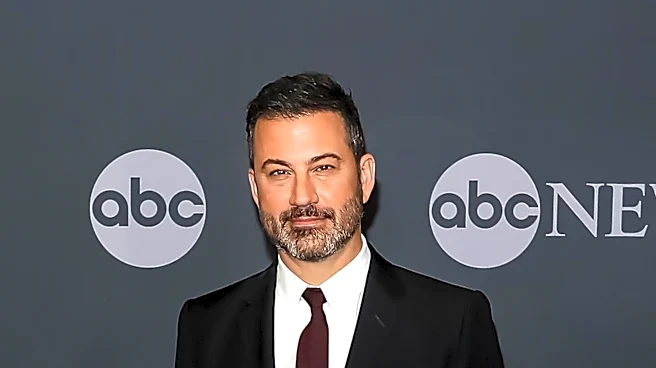
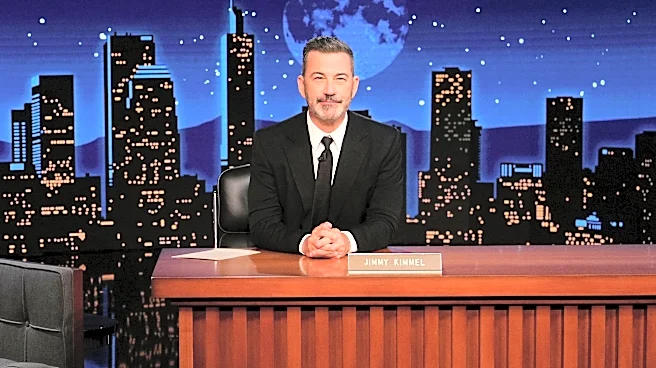
American late-night host Jimmy Kimmel is facing significant public backlash and calls for a boycott following an episode of 'Jimmy Kimmel Live!' that featured Israeli actress Gal Gadot as a primary guest. Gadot's appearance on the show drew sharp criticism
from pro-Palestine viewers and activists online, who initiated calls to boycott the segment. The episode also included a musical performance by the American indie pop band MUNA. Following the broadcast and the ensuing viewer outcry, MUNA member Naomi McPherson addressed the band's inclusion, explaining that their performance was pre-recorded days before the broadcast and they were not informed of the guest lineup. McPherson publicly voiced support for Palestine, stating 'Free Palestine.' The controversy highlights the ongoing sensitivity surrounding the Israeli-Palestinian conflict and how public figures' perceived stances can lead to immediate and strong reactions from audiences.
Why It's Important?
This incident underscores the increasing pressure on public figures and media platforms to navigate complex geopolitical issues, particularly the Israeli-Palestinian conflict, which elicits strong opinions globally and within the U.S. entertainment landscape. For Jimmy Kimmel and ABC, the boycott calls represent a potential threat to viewership and advertising revenue, as audiences are increasingly willing to disengage from content creators whose choices they deem problematic. The swift reaction from pro-Palestine activists demonstrates the power of online mobilization and the immediate impact social media can have on public perception and commercial interests. For artists like MUNA, it highlights the challenges of maintaining artistic integrity and political alignment in an industry where appearances can be scheduled without full disclosure of other guests, forcing them to clarify their positions publicly to avoid being associated with controversial figures or viewpoints. This event could set a precedent for how late-night shows and other media outlets approach guest selection and content curation in an era of heightened political and social awareness.
What's Next?
The immediate aftermath will likely involve monitoring the extent of the boycott's impact on 'Jimmy Kimmel Live!' viewership and engagement. Jimmy Kimmel and ABC may need to decide whether to issue a statement or adjust their future guest selection processes to mitigate further controversy, though no such plans have been announced. Other late-night shows and media platforms will likely observe this situation closely, potentially leading to more cautious approaches in booking guests who have taken public stances on sensitive international issues. Activist groups will continue to leverage social media to amplify their calls for boycotts and pressure media outlets to align with their political views. The incident could also prompt more artists to inquire about co-guests or segment contexts before agreeing to appearances, aiming to avoid unintended political associations. The long-term implications could include a shift in how entertainment media balances diverse viewpoints with audience expectations and political sensitivities.
Beyond the Headlines
This event delves into the broader implications of 'cancel culture' and the intersection of entertainment with global politics. It raises questions about the responsibility of media platforms to remain neutral versus reflecting diverse societal views, and whether entertainers should be held accountable for their political opinions or past actions, even if those actions are unrelated to their professional roles. The incident also highlights the growing influence of online activism in shaping public discourse and consumer behavior, demonstrating that audiences are not merely passive consumers but active participants who can exert significant pressure. Ethically, it challenges media organizations to consider the potential for alienating segments of their audience when featuring individuals with polarizing views. Culturally, it reflects a societal trend where political stances are increasingly integrated into personal and professional identities, making it difficult for public figures to separate their work from their politics, and for audiences to consume content without considering the creators' broader affiliations.