







What's Happening?
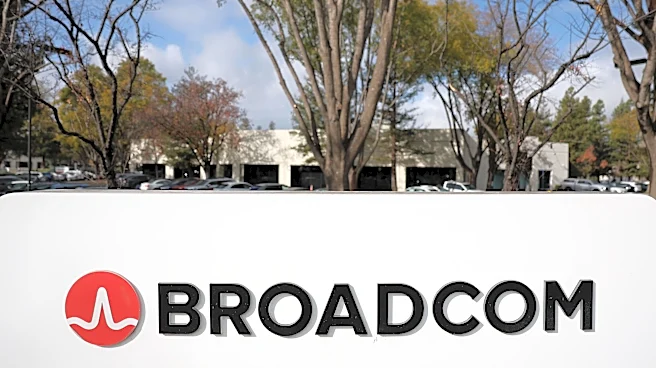
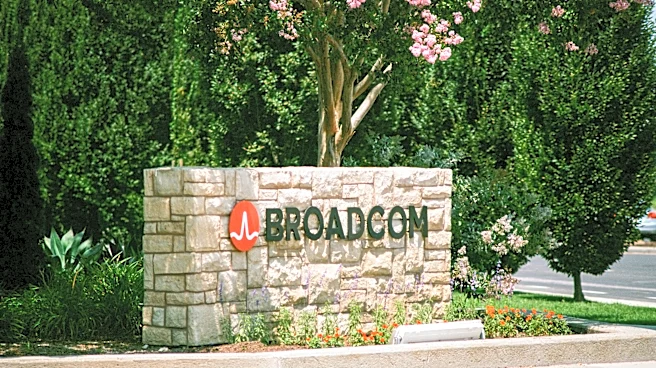
Broadcom, a semiconductor and infrastructure software company, completed a $325 million acquisition of its two-building research-and-development campus in Irvine, California, in September 2026. This transaction, identified by CoStar as the largest Orange
County office sale of the year, brings the 661,000-square-foot property back under Broadcom's ownership. The company had previously leased the site since selling its larger original campus in 2017. This move highlights a growing trend in Orange County where companies are investing in sprawling, purpose-built campuses that integrate offices, labs, manufacturing, and R&D facilities, moving away from single-building headquarters. Other companies like Anduril Industries and City of Hope are also expanding their campus footprints in the region, signaling a strategic shift towards consolidated operational control and long-term capital investment.
Why It's Important?
This acquisition by Broadcom underscores a significant shift in corporate real estate strategy within Orange County, moving towards mega-campuses. For businesses, this trend is driven by the need for enhanced operational control, improved talent retention, and a strategic approach to capital in a market with limited quality space. By owning its R&D campus, Broadcom eliminates lease uncertainty and gains flexibility for future expansion and reconfiguration without landlord constraints. This strategy is particularly crucial for companies engaged in dense engineering and lab work. The broader impact on the U.S. business landscape, especially in tech and defense sectors, suggests that integrated campuses are becoming a competitive advantage, allowing companies to keep engineering, manufacturing, and operations tightly coordinated. This could lead to increased efficiency and innovation, benefiting the companies involved and potentially attracting more talent to regions adopting this model.
What's Next?
The trend of companies securing and expanding mega-campuses in Orange County is expected to continue, with defense technology firms and healthcare organizations following similar paths. Traditional landlords are also adapting by investing heavily in upgrades to their large, amenity-rich campuses to meet the demand for high-quality environments that foster collaboration. This suggests a continued 'flight to quality' in the office market, where premium, strategically located campuses will attract capital and tenants, while secondary buildings may struggle. For Orange County, this could mean further development and consolidation of corporate footprints, potentially leading to increased economic activity and job creation in these integrated hubs. Companies evaluating real estate strategies will likely consider the benefits of owning or developing such campuses to gain pricing power, flexibility, and insulation from market volatility.
Beyond the Headlines
The shift towards mega-campuses in Orange County reflects a deeper re-evaluation of physical workspace in the post-pandemic era, even as remote work options persist. It highlights that for certain industries, particularly those requiring extensive R&D, manufacturing, or specialized facilities, the benefits of co-location and integrated operations outweigh the perceived advantages of fully remote or fragmented office models. This trend also points to a strategic move by companies to convert real estate from a pure expense into a strategic asset, strengthening corporate culture and employer branding. The bifurcation of the office market, where high-value assets attract long-term users and others are repurposed, could lead to significant urban planning and development changes, potentially impacting local economies and community structures as corporate hubs become more self-contained and amenity-rich.