







What's Happening?
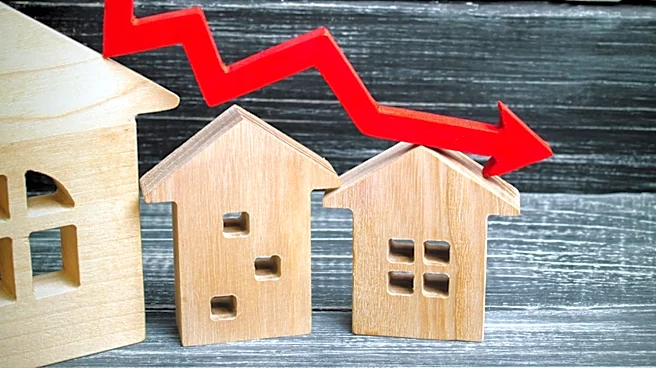
The U.S. housing market is experiencing a continued decline in pending home sales, which fell 16.4% year-over-year during the four weeks ending November 1, reaching their lowest level in Redfin's weekly records dating back to 2021. This decline occurred
despite three consecutive weeks of falling home-sale prices, with the median sale price slipping 0.4% from a year earlier to $388,604. Additionally, the typical monthly mortgage payment decreased to $2,777, its lowest in five weeks and $34 below its early October peak. However, this relief has been modest, as monthly payments remain 11.1% higher than a year ago. The weakness is widespread, with pending sales declining year-over-year in every major metro Redfin analyzed. Sellers are also retreating, with new listings falling 4.6% year-over-year, yet active listings remained 2.1% above last year's level, indicating homes are lingering on the market.
Why It's Important?
This trend signifies a significant shift in the U.S. housing market, where homebuyers are gaining leverage, but overall transaction activity is slowing. The persistent decline in pending sales, even with some price and mortgage payment relief, indicates that affordability remains a major barrier for many prospective buyers. The modest reduction in mortgage payments has not been enough to revive demand, suggesting that the cumulative effect of high rates over time has significantly eroded borrowing power. The retreat of sellers, coupled with homes lingering on the market, points to an imbalance where sellers' price expectations are not aligning with buyers' willingness or ability to pay. This dynamic creates a challenging environment for both buyers and sellers, potentially leading to longer selling times and increased negotiation for concessions. The slowdown is also reflected in mortgage pipelines, with purchase applications falling despite a decline in mortgage rates, underscoring the broader impact on the real estate and lending sectors.
What's Next?
The current market conditions suggest that the U.S. housing market will likely continue to see a period of adjustment. Homebuyers may find more opportunities to negotiate on price and terms, including seller concessions and closing-cost assistance, as sellers become more motivated to close deals. However, the overall volume of transactions is expected to remain subdued until a more significant improvement in affordability occurs. The ongoing imbalance between seller expectations and buyer capacity could lead to further price corrections in some markets. For the mortgage industry, the decline in purchase applications indicates a continued challenge in loan origination, despite fluctuating interest rates. The market will be closely watching for sustained drops in mortgage rates and more substantial decreases in home prices to stimulate demand and increase transaction volumes. The current environment may also encourage more creative financing solutions and a greater focus on existing home inventory rather than new construction.
Beyond the Headlines
The current state of the U.S. housing market reveals deeper economic and social implications. The persistent affordability crisis, driven by high home prices and elevated mortgage rates, is impacting homeownership rates and wealth accumulation for many Americans. The divergence between median asking prices and actual sale prices highlights a psychological barrier for sellers who may be reluctant to accept lower valuations after years of appreciation. This market slowdown could also have ripple effects on related industries, such as construction, home improvement, and real estate services. Furthermore, the increased leverage for buyers, while seemingly positive, is occurring within a context of reduced overall market activity, suggesting that the 'gains' are limited to a smaller pool of active participants. The long-term implications could include shifts in housing preferences, increased demand for rental properties, and a re-evaluation of housing as an investment vehicle versus a primary residence.