




What's Happening?
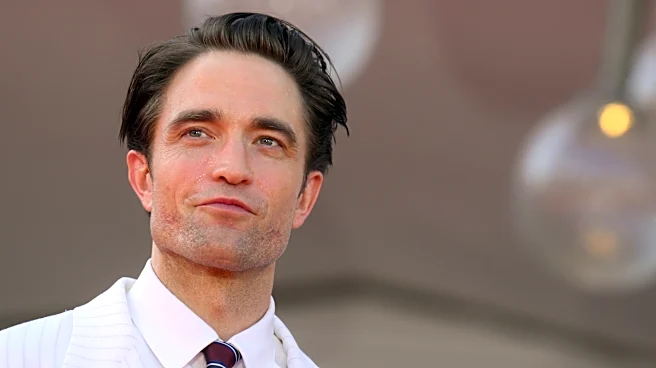
Matt Reeves' 2022 film 'The Batman', starring Robert Pattinson as Bruce Wayne, grossed $772 million globally and established its own distinct continuity separate from the broader DC Extended Universe (DCEU) or James Gunn's DC Universe (DCU). Following
the success of the film, a spin-off series titled 'The Penguin' is scheduled to premiere on HBO/Max in 2024, with Reeves serving as a producer. Additionally, a direct sequel, 'The Batman: Part II', is currently slated for release in 2026. This expansion indicates a strategic move to build a self-contained cinematic universe around Reeves' interpretation of the Batman character, focusing on a brooding, second-year Bruce Wayne. The initial film's financial performance and critical reception have laid the groundwork for these subsequent projects, suggesting a strong audience appetite for this particular take on the iconic superhero.
Why It's Important?
The development of 'The Batman' franchise with a spin-off series and a direct sequel highlights a significant trend in the entertainment industry: the creation of interconnected cinematic and television universes. This strategy allows studios to maximize intellectual property by developing multiple narratives and characters within a shared world, appealing to a broad audience base and fostering long-term engagement. For Warner Bros. and DC, this approach provides an opportunity to diversify their superhero offerings beyond the main DCU, catering to different creative visions and fan preferences. The success of 'The Batman' and the subsequent investment in its expansion demonstrate the commercial viability of standalone superhero narratives that prioritize a distinct artistic vision over broader franchise continuity. This also impacts the streaming landscape, with 'The Penguin' series bolstering HBO/Max's original content library, attracting subscribers and reinforcing the platform's position in the competitive streaming market.
What's Next?
The immediate next step for the franchise is the release of 'The Penguin' series on HBO/Max in 2024, which will further explore the criminal underworld of Gotham City and the character of Oswald Cobblepot. This series is expected to bridge the narrative gap between 'The Batman' and its upcoming sequel. Following this, 'The Batman: Part II' is scheduled for 2026, which will continue Bruce Wayne's story as the Caped Crusader. The success of 'The Penguin' will likely influence the future trajectory of the broader 'Batman' universe under Matt Reeves, potentially leading to more spin-offs or character-focused projects. Audiences can anticipate further announcements regarding casting, plot details, and production updates for 'The Batman: Part II' as its release date approaches. The performance of these upcoming projects will be crucial in determining the long-term viability and expansion of this particular DC continuity.
Beyond the Headlines
The decision to create a separate continuity for Matt Reeves' 'The Batman' reflects a broader industry shift towards allowing filmmakers more creative autonomy within established franchises. This approach contrasts with the more interconnected and often creatively constrained shared universes seen in other superhero properties. By allowing Reeves to craft a distinct vision, the studio aims to cultivate a unique artistic identity for this iteration of Batman, potentially leading to more critically acclaimed and character-driven narratives. This strategy also addresses the challenge of superhero fatigue by offering diverse interpretations of beloved characters, preventing stagnation and maintaining audience interest. The success of this model could influence how other major studios approach their intellectual properties, potentially leading to more varied and filmmaker-driven adaptations in the future, prioritizing artistic integrity alongside commercial success.