








What's Happening?
The U.S. economy added 57,000 jobs in June, falling short of economists' expectations of 113,000. The unemployment rate slightly decreased to 4.2%. The report highlights a mixed picture of the labor market, with professional and business services, social
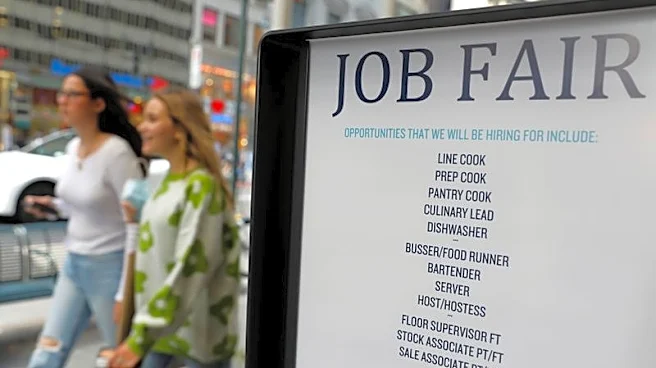
assistance, and healthcare sectors driving job gains. However, the leisure and hospitality sector, which had previously seen significant growth, experienced a decline of 61,000 jobs due to weaker seasonal hiring. Additionally, job data for April and May was revised down by 74,000 positions. Despite these challenges, layoff plans are reportedly on the decline, and job openings have exceeded expectations.
Why It's Important?
The June jobs report underscores the complexities of the current labor market, where certain sectors are experiencing growth while others face setbacks. The modest job gains suggest that while the labor market is improving, it is not yet robust enough to significantly impact the unemployment rate. This situation poses challenges for policymakers and businesses as they navigate economic recovery efforts. The report's findings will likely influence future economic policies and business strategies, particularly in sectors that are struggling to recover.
What's Next?
As the labor market continues to evolve, businesses and policymakers will need to address the disparities between sectors. Strategies to support sectors like leisure and hospitality, which are facing hiring challenges, will be crucial. Additionally, the Federal Reserve will consider these employment trends in its monetary policy decisions, particularly regarding interest rates and inflation management. The ongoing monitoring of job growth and sector-specific challenges will be essential for sustaining economic recovery.