








What's Happening?
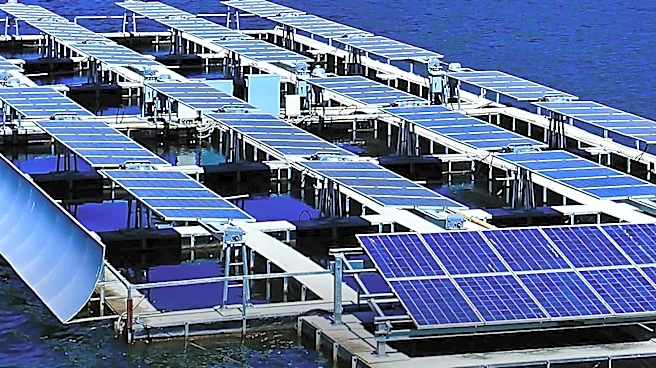
A floating solar system installed at Suffolk Fresh, a tomato farm in Suffolk, has demonstrated significant energy savings, cutting imported energy by over a fifth within 10 months of operation. The 1,250-panel array, fitted by East Green Energy on the
farm's water reservoir, generated 499,015 kWh of electricity, with 95% used on-site and the remainder exported to the grid. This installation, one of the largest floating solar schemes in the UK, provides a steady, low-carbon power supply, primarily for the farm's refrigeration systems. The project highlights the dual benefits of floating solar technology, which not only produces energy but also helps reduce water evaporation and erosion. East Green Energy, a family-run green energy firm, designed, installed, and maintains the system, importing parts from Germany.
Why It's Important?
This project at Suffolk Fresh serves as a compelling case study for the agricultural sector and other energy-intensive industries in the U.S., demonstrating a viable solution for reducing operational costs and environmental impact. For U.S. businesses, particularly those with significant energy demands like large-scale farming or industrial facilities, the 20% reduction in energy bills achieved by Suffolk Fresh represents substantial financial savings. The dual benefit of floating solar—energy generation and water conservation—is particularly relevant for regions facing water scarcity or high evaporation rates. This success story could accelerate the adoption of similar technologies across the U.S., contributing to national renewable energy goals and fostering greater energy independence for businesses. It also showcases the potential for innovative land-use strategies, utilizing existing water bodies for energy production without encroaching on valuable agricultural land.
What's Next?
The success of the Suffolk Fresh project is expected to increase interest in floating solar technology within the U.S. and globally. East Green Energy, the installer, is already progressing with several multi-megawatt schemes, indicating a growing market for this solution. Studies suggest that floating solar could reach over 40 gigawatts of capacity by 2050 in the UK, with 3.6 gigawatts by 2030, a trend that could be mirrored in the U.S. as more businesses seek sustainable and cost-effective energy solutions. We can anticipate increased investment in research and development for floating solar technologies, as well as policy incentives to encourage their adoption. This could lead to more widespread implementation across various industries, including agriculture, municipal water treatment facilities, and industrial sites with available water bodies, further integrating renewable energy into the national infrastructure.
Beyond the Headlines
Beyond the immediate energy and cost savings, the adoption of floating solar technology carries broader implications for environmental sustainability and resource management. By utilizing water bodies for solar panel installation, this technology offers a solution to the challenge of land scarcity often associated with large-scale solar farms. The cooling effect of water on solar panels also enhances their efficiency, a less obvious benefit that contributes to higher energy yields. Furthermore, the reduction in water evaporation from reservoirs, particularly in arid or drought-prone regions, could have significant long-term benefits for water conservation. This innovative approach to renewable energy production could also spur new economic opportunities in manufacturing, installation, and maintenance of floating solar systems, creating jobs and fostering technological advancements in the green energy sector. It represents a shift towards more integrated and multi-functional infrastructure development, where energy production and environmental stewardship are mutually reinforcing.