



What's Happening?
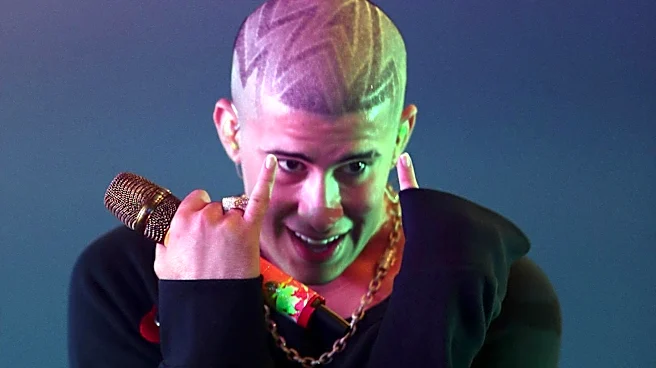
A federal judge has ruled that Bad Bunny, whose real name is Benito Martínez Ocasio, will not be reimbursed for nearly $500,000 in legal expenses incurred while successfully defending a copyright infringement lawsuit. The lawsuit, filed by Empawa Africa,
alleged that Bad Bunny's song 'Enséñame a bailar' from his album 'Un Verano Sin Ti' contained an unauthorized sample of the 2019 track 'Empty My Pocket' by Nigerian artist Dera (Ezeani Godfrey). Bad Bunny's legal team argued that the sample was properly authorized by Lakizo Entertainment, another rights holder for 'Empty My Pocket.' Empawa Africa subsequently dropped the case. Bad Bunny's lawyers then sought reimbursement for legal fees, claiming the lawsuit was baseless and intended to generate negative publicity for a payout. However, Judge Otis D. Wright II determined that Empawa's lawsuit was 'objectively reasonable' and could have succeeded if litigated further, finding no evidence of ulterior motives.
Why It's Important?
This ruling is significant for copyright law in the U.S. music industry, particularly concerning the 'fee-shifting' provision available in copyright cases. While judges can order reimbursement of legal fees when a lawsuit is deemed unfounded or filed with improper intent, this decision clarifies the boundaries of such provisions. The judge emphasized that punishing Empawa for filing this type of infringement claim would be 'antithetical' to the purpose of copyright law. This sets a precedent that even if a defendant ultimately prevails, the plaintiff may not be penalized for legal costs if their initial claim was considered objectively reasonable. This could influence how artists and record labels approach copyright disputes, potentially encouraging more litigation if the risk of paying the opposing party's legal fees is mitigated, even in cases that are eventually dropped.
What's Next?
The decision by Judge Wright is likely to be closely examined by legal professionals and stakeholders in the music industry. It reinforces the idea that copyright holders have a right to pursue claims they believe are legitimate without automatic fear of bearing the defendant's legal costs, even if the case does not proceed to a full trial. This could lead to more cautious approaches from artists and their legal teams when using samples, ensuring clear documentation of all necessary authorizations. Conversely, it might embolden smaller rights holders to pursue claims against larger artists if they perceive a legitimate infringement, as the financial risk of a failed lawsuit might be less daunting. The ruling may also prompt further discussions and potential appeals regarding the interpretation of 'objectively reasonable' in copyright litigation.
Beyond the Headlines
The case highlights the complex and often contentious nature of intellectual property rights in the digital age, especially within the music industry where sampling is prevalent. The judge's statement that imposing legal fees would 'send the wrong message' to parties seeking to protect their intellectual property underscores a broader societal value placed on safeguarding creative works. This ruling could influence the balance of power between established artists and smaller creators or rights holders. It also brings to light the challenges of proving authorization for samples, particularly when multiple entities hold rights to a single track. The decision suggests that simply asserting authorization without providing conclusive evidence may not be sufficient to deter a lawsuit or warrant fee reimbursement, emphasizing the importance of transparent and verifiable licensing agreements.