




What's Happening?
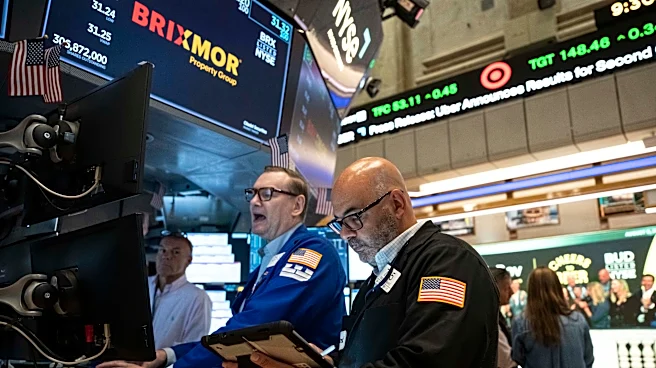
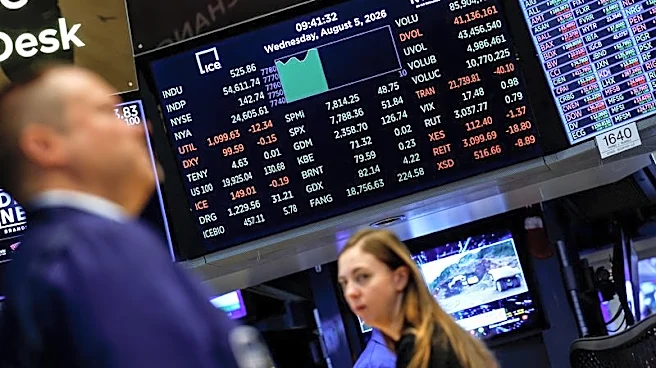
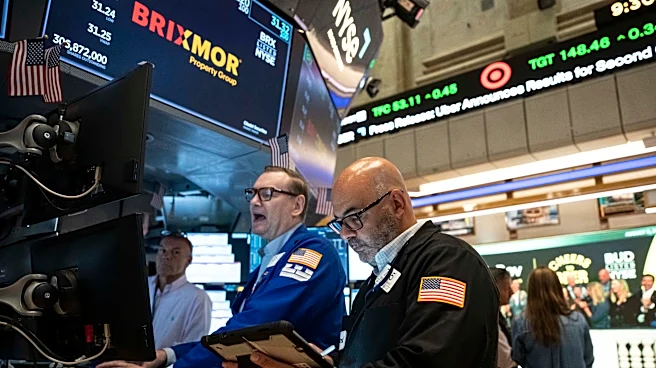
The S&P 500 closed at a record high following a weaker-than-expected July payroll report, which showed a contraction of 23,000 jobs. This unexpected decline led to a decrease in the probability of a September interest rate hike by the Federal Reserve,
dropping from 55% to 44%. The labor market's weakness, coupled with lower oil prices due to potential progress in Iran negotiations, contributed to the stock market rally. Technology, consumer discretionary, and materials sectors led the gains, while energy lagged due to falling crude prices.
Why It's Important?
The stock market's reaction to the payroll report underscores the significant influence of labor market data on monetary policy expectations and investor sentiment. The reduced likelihood of an interest rate hike provides a more favorable environment for growth stocks, as lower rates typically support higher valuations. This development highlights the delicate balance the Federal Reserve must maintain between controlling inflation and supporting economic growth. The market's response also reflects the ongoing impact of geopolitical factors, such as oil prices, on economic conditions and policy decisions.
What's Next?
Investors will closely monitor upcoming economic data and Federal Reserve communications for further insights into the central bank's policy direction. Any changes in geopolitical developments, particularly regarding oil prices and international agreements, could influence market dynamics and rate expectations. The Federal Reserve's next moves will be critical in shaping the economic landscape, with potential implications for inflation, employment, and overall economic stability. Market participants will also watch corporate earnings reports for additional signals on economic health and business conditions.