




What's Happening?
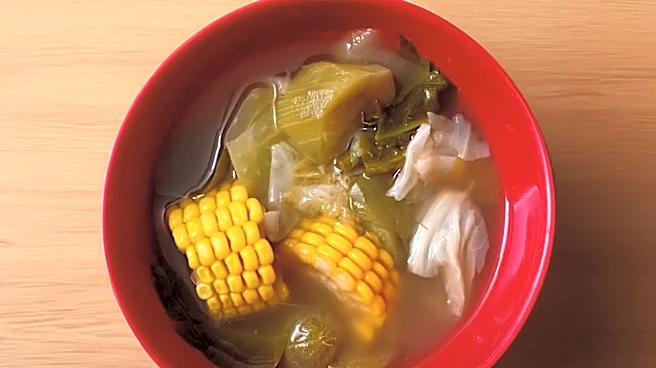
Caldo, a traditional broth-based dish, holds significant cultural value for many Mexican American families, especially during the summer months. Despite its hot nature, caldo is often consumed in warmer weather due to its nutritional benefits, likened
to 'a Mexican Gatorade' for its salt and nutrient content. For many first- and second-generation Latin Americans, caldo is more than just a meal; it represents a connection to their heritage and family traditions. Individuals like Patty Rodriguez and Ramon Guzman share personal stories of how caldo has been a staple in their lives, providing comfort and a sense of identity.
Why It's Important?
The story of caldo highlights the role of food in cultural preservation and identity among immigrant communities in the U.S. It underscores how traditional dishes serve as a bridge between generations, helping to maintain cultural ties and pass down heritage. This cultural practice also reflects broader themes of adaptation and resilience among immigrant families, as they navigate life in a new country while preserving their cultural roots. The popularity of caldo during summer, despite its heat, illustrates the deep emotional and cultural connections that food can foster.
Beyond the Headlines
Caldo's significance extends beyond its nutritional value, serving as a symbol of cultural resilience and identity. For many, it represents a way to honor family traditions and maintain a connection to their roots. The dish's popularity among younger generations suggests a growing appreciation for cultural heritage and a desire to preserve these traditions. As more people embrace their cultural identities, dishes like caldo play a crucial role in fostering community and continuity within immigrant families.