






What's Happening?
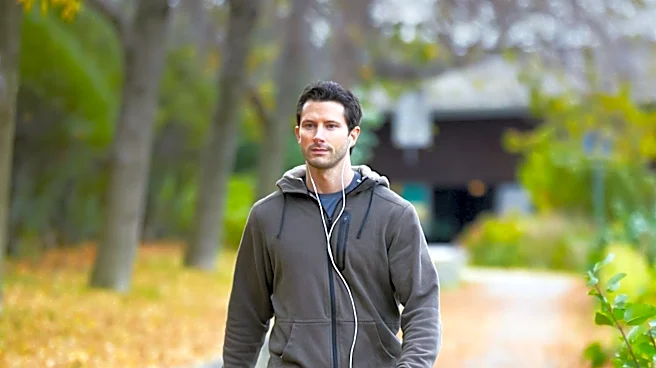
A morning walk is being highlighted as a simple, accessible, and cost-free daily habit that offers numerous health benefits. This practice contributes to better heart health, reduces the risk of diabetes, and improves mood and concentration. Experts suggest
that the multisensory experiences in nature, such as rustling leaves and gentle breezes, engage individuals without overwhelming their minds, which helps calm the nervous system and reset focus. The concept of a 'movement snack' is also introduced, advocating for digestible chunks of exercise that can be easily integrated into busy routines. This approach emphasizes making the barrier to starting low and engaging enough to encourage consistent participation, rather than waiting for extended workout windows. The benefits extend beyond physical fitness, impacting mental and emotional states positively.
Why It's Important?
The emphasis on morning walks and 'movement snacks' is important because it offers a practical and universally accessible solution to combat the sedentary lifestyles prevalent in modern society. Many health problems are driven or amplified by a disconnect from natural habitats and traditional ways of living, with individuals spending minimal time in nature and experiencing deteriorating diets and reduced social interaction. This simple habit addresses multiple facets of well-being—physical, mental, and emotional—without requiring financial investment or significant time commitments. By promoting consistent, small bursts of activity and exposure to nature, it can help mitigate chronic diseases, improve sleep patterns, reduce stress, and enhance cognitive functions like concentration and energy levels. This approach democratizes health improvement, making it attainable for a broader population.
What's Next?
The promotion of morning walks and 'movement snacks' suggests a shift towards integrating wellness into daily life through micro-habits. Individuals are encouraged to incorporate these practices by finding green spaces nearby, even if it's just a tree-lined street, and to be present during these moments by observing nature. The goal is to make these activities a regular part of one's routine, helping to align internal body clocks and build sleep drive. This trend could lead to increased public health initiatives focusing on accessible, low-cost physical activity and nature engagement. Further research may explore the long-term impacts of such micro-interventions on public health outcomes and their potential to reduce healthcare burdens.
Beyond the Headlines
Beyond the immediate health benefits, the focus on morning walks and nature engagement touches upon deeper societal implications regarding our relationship with the environment and the prioritization of mental well-being. The concept of 'soft fascination' highlights the psychological benefits of natural environments, suggesting that modern life's constant stimulation can be counteracted by the calming influence of nature. This approach challenges the commercialization of wellness, asserting that some of the most effective health interventions are free and readily available. It also underscores the importance of mindfulness and presence in daily activities, advocating for a more balanced and less overwhelming approach to self-care. This could foster a cultural shift towards valuing simplicity and natural engagement over complex, expensive wellness trends.