






What's Happening?
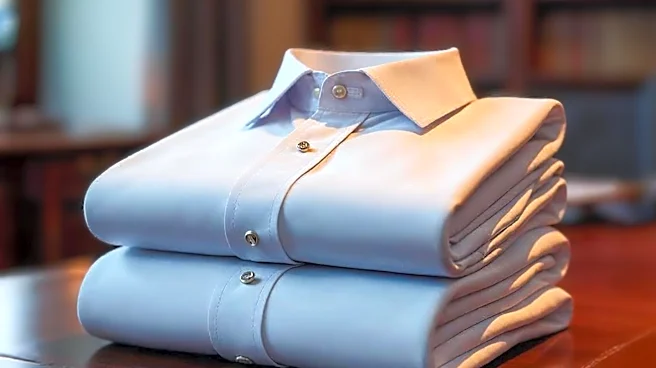
Allevol, a menswear brand, has released a modern interpretation of a 1960s Brooks Brothers campus shirt. This new shirt is the result of Allevol's meticulous study of an original, deadstock 1960s Brooks Brothers button-down shirt. Instead of simply reproducing
the vintage garment, Allevol focused on understanding the unique qualities that made the original special. The resulting 'Campus Shirt' is made in England from heavily woven Japanese Oxford cotton and features long collar points designed to create the natural collar roll sought after by Ivy Style enthusiasts. The fit is generous, based on the original 1960s proportions, and includes long curved shirt tails, making it versatile for both formal and casual wear. This initiative by Allevol aims to offer a way to achieve the iconic 1960s Ivy Style without the need for extensive searching on secondary markets.
Why It's Important?
This development is significant for the menswear industry and consumers interested in classic American styles. Brooks Brothers has a long-standing legacy, established about a century ago, as a purveyor of classic menswear, particularly formal wear like suit jackets and trench coats. Allevol's approach highlights a growing trend in fashion where brands draw inspiration from historical garments, not just for replication, but for reinterpretation using modern materials and manufacturing techniques. This allows for the preservation and reintroduction of classic aesthetics with contemporary quality and comfort. For consumers, it provides access to a refined, vintage-inspired look that might otherwise be difficult or expensive to acquire. It also underscores the enduring appeal of the 'Ivy Style,' demonstrating its continued relevance and influence in current fashion trends, particularly among those who value timeless design and quality craftsmanship.
What's Next?
The release of Allevol's Campus Shirt could inspire other brands to delve into historical archives for design inspiration, potentially leading to a resurgence of interest in classic American menswear styles. This might encourage collaborations between contemporary brands and heritage labels, or prompt heritage brands themselves to re-release or update their iconic designs. Consumers can expect to see more garments that blend vintage aesthetics with modern production, offering a wider range of options for those seeking classic, durable, and versatile clothing. The success of this approach could also influence how fashion brands market their products, emphasizing the historical context and craftsmanship behind their designs. Furthermore, it may foster a greater appreciation for the detailed construction and fabric choices that defined classic garments, potentially shifting consumer preferences towards quality and longevity over fast fashion trends.
Beyond the Headlines
Beyond the immediate product release, Allevol's project touches upon the broader cultural significance of clothing and its role in defining eras and styles. The 1960s Ivy Style, epitomized by brands like Brooks Brothers, represents a particular moment in American fashion history, associated with collegiate life, intellectualism, and a certain understated elegance. By meticulously studying and reinterpreting a garment from this period, Allevol is not just selling a shirt; it's offering a piece of cultural heritage. This approach encourages a deeper understanding of fashion as a reflection of societal values and historical context. It also raises questions about authenticity and interpretation in fashion—how much can a modern garment embody the spirit of its vintage predecessor while still being distinct? This trend could lead to a more thoughtful consumption of fashion, where consumers are more aware of the stories and craftsmanship behind their clothes, moving beyond mere trends to appreciate enduring style and quality.