








What's Happening?
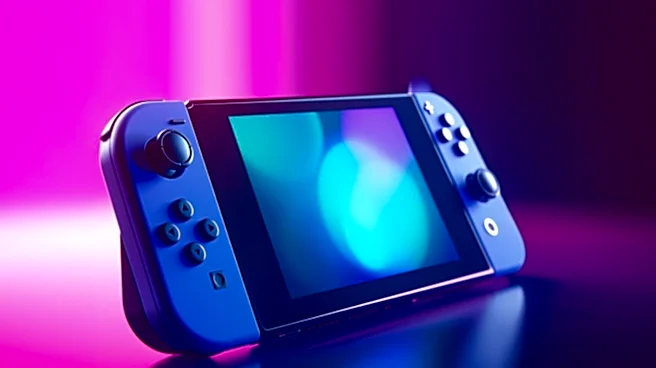
Nintendo is reportedly considering an OLED version of its upcoming Switch 2 console, according to a report from ZDNet Korea. The company is evaluating the feasibility of incorporating a 1920x1080 resolution OLED panel, which would be an upgrade from the 1280x720
OLED panel used in the original Switch OLED model. However, the project has not yet received final approval and remains under internal review. If Nintendo decides to proceed, development could begin by the end of 2026, with mass production potentially starting in late 2027 or early 2028. Samsung Display is reportedly interested in supplying the panels for this new model, having previously provided the 7-inch OLED display for the original Switch OLED. The decision to move forward with the OLED model hinges on cost considerations, as the price difference between LCD and rigid OLED panels is significant.
Why It's Important?
The potential upgrade to an OLED display for the Switch 2 could significantly enhance the visual experience for users, offering better color accuracy and contrast compared to traditional LCD screens. This move could position Nintendo more competitively in the gaming console market, where visual performance is a key selling point. However, the cost implications of adopting OLED technology could affect the pricing strategy for the Switch 2, potentially impacting its market accessibility. If the additional costs are passed on to consumers, it could influence purchasing decisions, especially in a market where price sensitivity is a factor. The decision also reflects broader industry trends towards higher-quality displays in consumer electronics, aligning with consumer expectations for premium visual experiences.
What's Next?
Should Nintendo decide to proceed with the OLED version of the Switch 2, the company will need to finalize its supply chain arrangements, particularly with Samsung Display, to ensure timely production. The decision will also require strategic planning around pricing and marketing to effectively communicate the benefits of the OLED upgrade to consumers. Additionally, Nintendo will need to consider the competitive landscape, as other gaming console manufacturers may also be planning hardware upgrades. The timeline suggests that any official announcements or product launches would not occur before 2028, giving Nintendo ample time to refine its product offering and strategy.