




What's Happening?
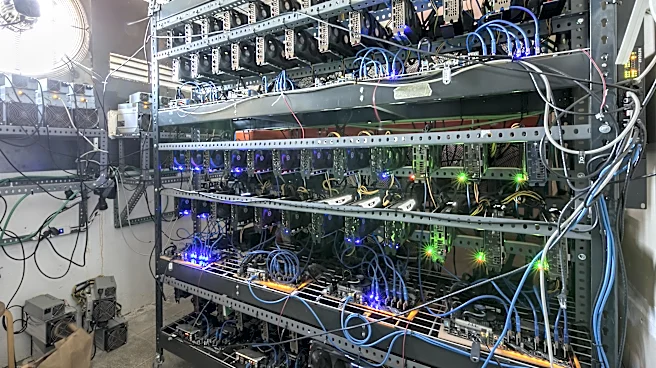
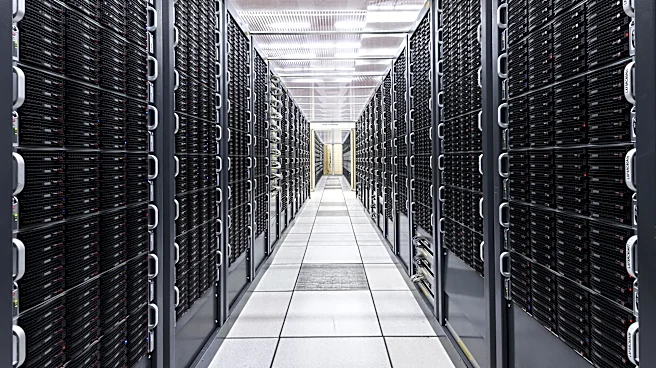
TeraWulf's stock experienced a significant surge of 15% as the broader AI infrastructure market rebounded. The company is actively transitioning its business model from Bitcoin mining to focusing on AI and high-performance computing (HPC) infrastructure.
This strategic shift is evidenced by its financial performance, with HPC rental income reaching $63 million in the third quarter of 2026, accounting for approximately 83% of its total revenue of $76.2 million. This marks a substantial increase from $7.2 million in the same period the previous year. TeraWulf has secured a 20-year lease agreement with Anthropic for approximately 401 megawatts of IT capacity for its Justified project, with phased delivery expected to begin by the end of 2027. Additionally, the company has increased the contracted power capacity at its Muskie site from 500 MW to 1 GW, with the initial 500 MW anticipated to come online in the fourth quarter of 2028, pending regulatory approval from the Kentucky Public Service Commission (KPSC). CEO Paul Prager emphasized the company's focus on securing high-quality tenants and avoiding equity dilution for its Muskie project.
Why It's Important?
TeraWulf's pivot to AI and HPC infrastructure is significant as it positions the company to capitalize on the rapidly growing demand for computing power. The substantial increase in HPC rental revenue demonstrates the viability of this transition and its potential to generate long-term, predictable income streams. Securing major clients like Anthropic, backed by credit support from Google, provides financial stability and validates TeraWulf's strategy in attracting investment-grade customers. The expansion of the Muskie site to 1 GW underscores the company's ambition to become a major player in the AI data center market. This shift is crucial for TeraWulf's long-term growth prospects, as it moves away from the volatile cryptocurrency mining sector towards a more stable and high-demand industry. The company's approach to financing new projects, prioritizing customer prepayments and strategic capital over equity dilution, reflects a cautious yet growth-oriented strategy in a competitive market.
What's Next?
TeraWulf's immediate next steps involve progressing with the phased delivery of the Justified project, which is expected to commence by the end of 2027 and continue through the first half of 2028. For the Muskie project, the company will focus on obtaining regulatory approval from the Kentucky Public Service Commission (KPSC) for its expanded 1 GW capacity. Design and engineering work for the necessary 345-kilovolt substation is also underway. A critical aspect will be securing long-term tenants for the Muskie site, with CEO Paul Prager indicating a preference for high-quality customers and transaction structures that minimize equity dilution. The initial 500 MW of the Muskie project is slated to come online gradually in the fourth quarter of 2028, with the additional 500 MW following in 2029. The company will also need to manage its significant debt structure and ongoing capital expenditures as these large-scale projects move from development to operational phases.
Beyond the Headlines
TeraWulf's strategic shift highlights a broader trend in the digital infrastructure sector, where companies are repurposing existing assets or developing new ones to meet the insatiable demand for AI computing power. This transition from Bitcoin mining to HPC infrastructure reflects a recognition of changing market dynamics and the long-term growth potential of AI. The emphasis on securing credit-worthy clients and structuring deals to avoid equity dilution points to a maturing industry where financial prudence and strategic partnerships are paramount. The company's ability to convert power resources into long-term AI computing rental revenue, as demonstrated by its existing projects, sets a precedent for other firms looking to enter or expand in this space. This move also underscores the increasing value of reliable power supply and established infrastructure in the AI data center market, making projects with existing connectivity and permits more attractive to investors and clients alike.