





What's Happening?
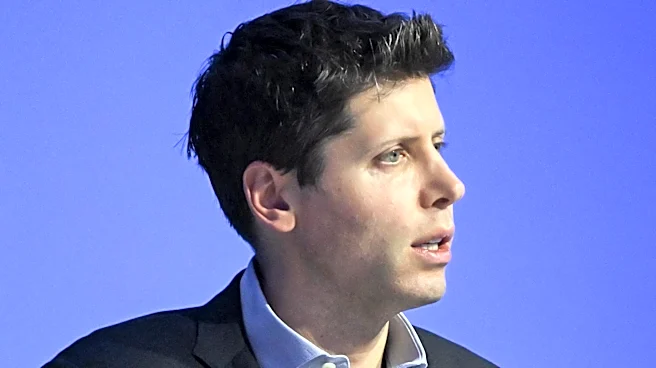
Sam Altman, CEO of OpenAI, has stated that the artificial intelligence industry needs to set its ambitions higher than merely curing cancer to win over skeptics and demonstrate its true value. Speaking to Bloomberg Television, Altman criticized the tech
industry for doing a 'terrible job' in communicating the positive case for AI, leading to souring public trust. While acknowledging that curing cancer with AI would be a 'wonderful thing,' he believes AI should also 'enable a boom in creativity and entrepreneurship.' This perspective contrasts with some tech leaders, like Anthropic CEO Dario Amodei, who suggest that tangible benefits like curing cancer are essential to gaining public acceptance. Altman's comments come as public sentiment towards AI has increasingly turned negative, with concerns about data center impact, job market disruption, and ethical implications.
Why It's Important?
Altman's call for AI to foster entrepreneurship and creativity, rather than solely focusing on grand challenges like curing cancer, is significant for several reasons. It shifts the narrative from a utopian, problem-solving technology to one that empowers individuals and drives economic growth at a grassroots level. This approach could resonate more broadly with the public by demonstrating direct, accessible benefits beyond highly specialized scientific breakthroughs. If AI can indeed lower barriers to starting businesses and unleash a wave of innovation, it could lead to significant job creation, economic diversification, and increased individual autonomy. This perspective also implicitly addresses concerns about AI's potential to displace jobs by highlighting its capacity to create new opportunities. However, the challenge lies in effectively communicating these benefits and ensuring equitable access to AI tools for aspiring entrepreneurs.
What's Next?
To realize Altman's vision, OpenAI and other AI companies will likely need to develop and promote tools that are specifically designed to support small businesses and individual creators. This could involve creating more user-friendly AI platforms, offering educational resources, and fostering ecosystems where AI-powered entrepreneurship can thrive. There may also be a push for policy initiatives that encourage the adoption of AI by small and medium-sized enterprises. The industry will need to actively engage in public discourse to articulate how AI can empower individuals and contribute to economic prosperity, moving beyond abstract promises. Addressing public concerns about job displacement and ethical use will remain crucial, requiring a balanced approach that emphasizes both innovation and responsible development.
Beyond the Headlines
Altman's emphasis on AI as a catalyst for entrepreneurship and creativity delves into the deeper societal impact of artificial intelligence. It suggests a future where AI democratizes access to tools and capabilities previously reserved for large corporations or highly skilled individuals, potentially leading to a more decentralized and dynamic economy. This vision challenges the perception of AI as a job-destroying force, instead positioning it as a tool for human augmentation and empowerment. However, realizing this potential requires careful consideration of digital divides, ensuring that AI tools are accessible and affordable for all, not just a privileged few. It also necessitates robust educational initiatives to equip individuals with the skills needed to leverage AI for entrepreneurial endeavors. The long-term success of this approach will depend on whether AI can truly foster widespread economic opportunity and creativity, or if its benefits remain concentrated among a select group.