





What's Happening?
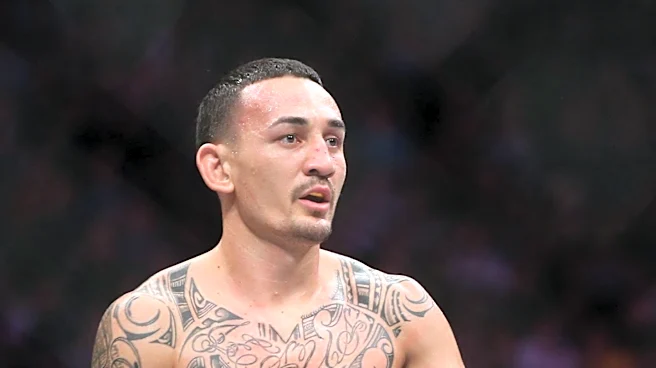
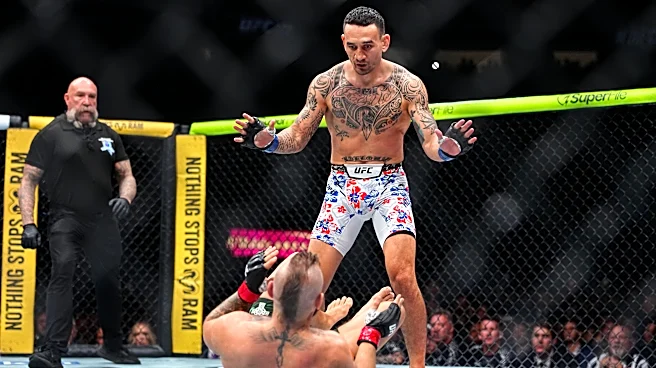
Conor McGregor, the renowned UFC fighter, suffered a suspected serious leg injury during his comeback fight against Max Holloway at UFC 329 in Las Vegas. The fight, which marked McGregor's return to the Octagon after more than five years, ended abruptly
just over a minute into the first round. McGregor's leg appeared to give way during an exchange, leading to a TKO victory for Holloway. The injury has not been officially diagnosed, but it is suspected to involve McGregor's ACL. Holloway expressed concern for McGregor's health, emphasizing the anticlimactic nature of the victory. The event was highly anticipated, with McGregor's return generating significant promotional hype.
Why It's Important?
The injury to Conor McGregor is significant as it casts doubt on the future of one of UFC's most prominent figures. McGregor's return was expected to rejuvenate his career and draw substantial attention to the sport. However, the injury raises questions about his ability to compete at the highest level, especially given his age and previous injuries. For the UFC, McGregor's health is crucial as he remains a major draw for audiences and a key figure in promoting events. The outcome of this fight also impacts Max Holloway's career trajectory, as he may now seek new challenges in the welterweight division, potentially targeting high-profile opponents like Islam Makhachev.
What's Next?
If McGregor's injury is confirmed to be an ACL issue, he may face a lengthy recovery period, delaying any potential return to the Octagon. This could affect his marketability and the UFC's ability to feature him in future events. Meanwhile, Max Holloway may pursue other opportunities in the welterweight division, possibly setting his sights on a fight with Islam Makhachev. The UFC will need to consider how to manage McGregor's career moving forward, balancing the nostalgia of his past achievements with the reality of his current physical condition.