





What's Happening?
Arda Industries, a new company founded by Bob McGrew, former research chief at OpenAI, has emerged from stealth mode, announcing $232 million in funding. This includes a $160 million Series A round at a $1.5 billion valuation, co-led by Altimeter, Accel,
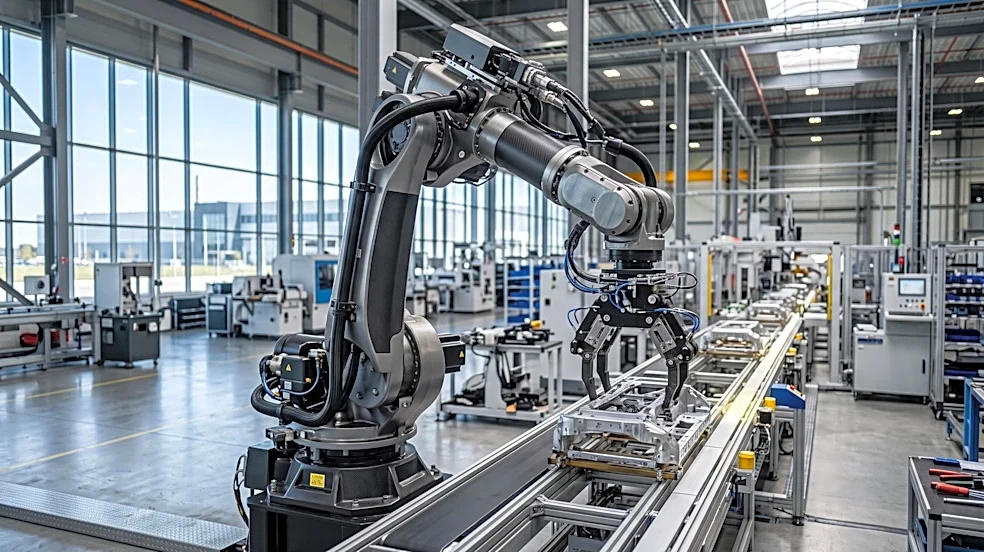
and Khosla Ventures, following a $72 million seed round. Arda Industries aims to transform U.S. manufacturing by developing AI software that converts new product designs into operational assembly lines. The company's AI agent utilizes CAD files and design documents to determine assembly order, write instructions, and configure factory stations, significantly reducing the time required for these processes. For instance, basic work instructions that previously took 10 hours can now be completed in 15 minutes, and complex engineering tasks are reduced from 30 hours to approximately 2.5 hours. Arda is currently working with defense and data center supply chain manufacturers, including Anduril, its first design partner and customer.
Why It's Important?
This development is significant for U.S. manufacturing, which has faced challenges in competing with overseas production, particularly in complex sectors like consumer electronics. Arda Industries' AI-driven approach could drastically cut the time and cost associated with setting up and reconfiguring manufacturing lines. This efficiency gain is crucial for industries where product lifecycles are short, such as smartphones, which typically remain in full production for only about four months. By enabling faster and more flexible production, Arda aims to make it economically viable to manufacture a wider range of products in the U.S., potentially creating a 'fully automated version of Shenzhen in West Texas,' as envisioned by McGrew. This could lead to job creation, bolster national security through domestic defense manufacturing, and reduce reliance on foreign supply chains, impacting various U.S. industries and economic stakeholders.
What's Next?
Arda Industries plans to expand its AI applications beyond defense and data center supply chains to include consumer electronics and robotics. The company is actively prototyping AI agents designed to program robots for assembly tasks, further automating the manufacturing process. The immediate focus will be on refining its platform to help manufacturers design and operate manual assembly lines more efficiently. Subsequently, Arda intends to develop automated lines that can be reconfigured as rapidly as human workers, a capability that could revolutionize American manufacturing. The success of Arda's technology could prompt other manufacturing companies to invest in similar AI-driven automation solutions, potentially leading to a broader resurgence of domestic production across various sectors. The company's high valuation suggests strong investor confidence in its potential to disrupt the manufacturing landscape.
Beyond the Headlines
The emergence of Arda Industries highlights a deeper trend of leveraging advanced AI to address long-standing economic and strategic challenges. The company's mission to bring manufacturing back to the U.S. through automation touches upon themes of economic sovereignty, technological innovation, and national security. The ability to rapidly reconfigure assembly lines using AI could mitigate risks associated with global supply chain disruptions and geopolitical tensions. Furthermore, this initiative raises questions about the future of labor in manufacturing, as increased automation could shift the demand from manual labor to skilled roles in AI development, maintenance, and oversight. The ethical implications of AI in manufacturing, such as job displacement and the need for workforce retraining, will likely become more prominent as such technologies become more widespread. Arda's success could set a precedent for how AI can be strategically deployed to reshape industrial capabilities on a national scale.