







What's Happening?
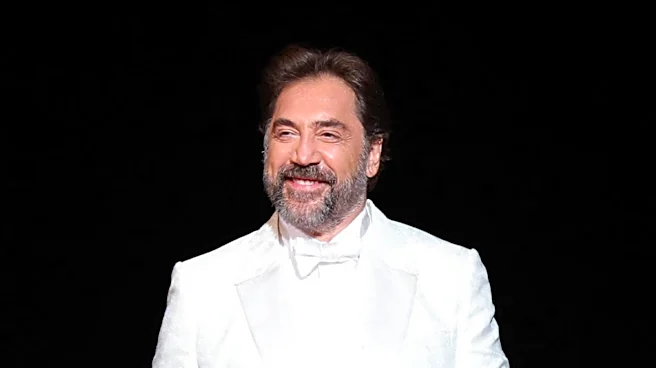
Javier Bardem, the 57-year-old actor, recently shared insights into his personal life, particularly regarding the musical tastes within his household and his approach to parenting. In an exclusive interview, Bardem revealed that while he personally enjoys
rock & roll, heavy metal, and music from the 60s and 80s, the soundtrack of his home is heavily influenced by reggaeton, a genre favored by his children. He acknowledged that some reggaeton lyrics can be 'terrible' but emphasized his preference for education and conversation over prohibition when it comes to his children's exposure to such content. This perspective highlights his belief in using music, even genres he doesn't personally prefer, as a tool for dialogue about broader societal issues like sexism, masculinity, consumerism, and the role of women.
Why It's Important?
Bardem's comments offer a glimpse into the evolving dynamics of family life in the digital age, where diverse cultural influences, particularly music, shape household environments. His approach to parenting, prioritizing open dialogue and education over strict bans, resonates with contemporary discussions on raising children in a world saturated with varied media. This method could be seen as a model for parents navigating similar challenges, encouraging critical thinking and discussion rather than simply shielding children from content deemed undesirable. The actor's willingness to engage with his children's musical preferences, despite his own differing tastes, underscores a broader societal shift towards understanding and bridging generational gaps through shared experiences and mutual respect, even when those experiences involve potentially controversial artistic expressions.
What's Next?
While Bardem's statements are personal reflections rather than policy proposals, they contribute to an ongoing public discourse about parenting strategies and media consumption in families. His emphasis on conversation could inspire other public figures and parents to share their own experiences and approaches, potentially fostering a wider adoption of similar educational methods. This could lead to more open discussions within families about the messages conveyed through popular culture, encouraging children to critically analyze content rather than passively consume it. The interview's impact may extend to how media and parenting experts discuss the role of music in child development and the effectiveness of different disciplinary approaches in the context of modern entertainment.
Beyond the Headlines
Beyond the immediate discussion of music and parenting, Bardem's remarks touch upon deeper cultural and ethical considerations. His acknowledgment of 'terrible' reggaeton lyrics, coupled with his choice to engage rather than prohibit, highlights the complex challenge of navigating artistic freedom versus social responsibility. This approach suggests a belief that even problematic content can serve as a catalyst for important conversations about societal values and norms. It also implicitly addresses the generational divide in cultural appreciation, where younger generations often embrace new forms of expression that older generations may find challenging. Bardem's stance promotes a nuanced understanding of cultural evolution, suggesting that engagement and critical analysis are more constructive than outright rejection in fostering informed and responsible citizens.