
What's Happening?
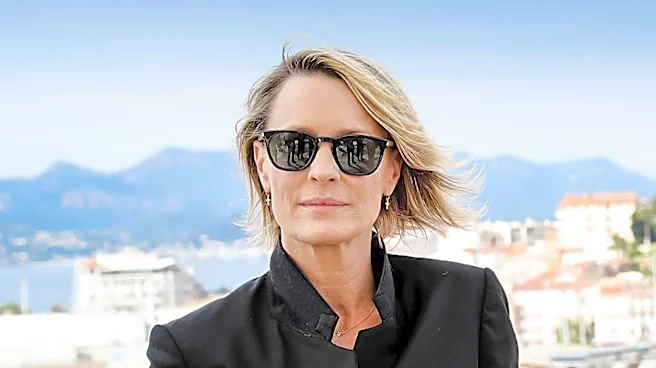
Robin Gayle Wright, born on April 8, 1966, in Dallas, Texas, has established a notable career as an actress, director, and producer. Her career began in the 1980s with television roles before she gained
international recognition. A significant early role was as Buttercup in the 1987 fantasy romance 'The Princess Bride,' which has since achieved cult status. The 1990s saw her take on defining roles in major film productions, including playing Jenny Curran opposite Tom Hanks in 'Forrest Gump' in 1994, a performance that earned her a Golden Globe nomination. Other notable films from this period include 'Moll Flanders' (1996), 'Message in a Bottle' (1999), and M. Night Shyamalan's 'Unbreakable' (2000). More recently, Wright achieved a new career highlight starting in 2013 with the television series 'House of Cards,' where she starred as Claire Underwood alongside Kevin Spacey. For this role, she received a Golden Globe and multiple Emmy nominations. She also expanded her role by directing several episodes and taking over the lead role in later seasons of the series. Her recent film work includes 'Blade Runner 2049' (2017) and 'Wonder Woman' (2017), where she portrayed the Amazon warrior Antiope.
Why It's Important?
Robin Wright's career trajectory highlights the evolving landscape for actresses in Hollywood, demonstrating longevity and versatility across different mediums and genres. Her early success in 'The Princess Bride' cemented her as a recognizable face, while her role in 'Forrest Gump' showcased her dramatic range, earning critical acclaim and a Golden Globe nomination. This established her as a serious dramatic actress capable of handling complex characters. Her later work in 'House of Cards' is particularly significant as it marked a pivotal moment in the rise of streaming television and its ability to attract top-tier talent. Her transition from a leading actress to also directing episodes and eventually leading the series after a major cast change underscores her growing influence and leadership within the industry. This demonstrates how established actors can leverage their experience to take on more comprehensive creative roles, influencing both the artistic direction and commercial success of major productions. Her continued presence in high-profile films like 'Blade Runner 2049' and 'Wonder Woman' further solidifies her status as a respected and sought-after performer in contemporary cinema.
What's Next?
Given Robin Wright's established career as an actress, director, and producer, it is likely she will continue to pursue diverse projects across film and television. Her recent directorial work on 'House of Cards' suggests a continued interest in roles behind the camera, potentially leading to more directing opportunities in both television series and feature films. Her involvement in major franchises like 'Wonder Woman' indicates a willingness to participate in large-scale productions, which could lead to further roles in similar blockbuster films. As a Golden Globe winner and Emmy nominee, she remains a highly regarded talent, making her a strong candidate for leading roles in prestige dramas and independent films. The industry trend towards streaming services producing high-quality original content also presents numerous opportunities for Wright, both as an actress and a director, to engage with innovative storytelling formats. Her ability to transition between different types of projects and take on multifaceted roles suggests a dynamic future in the entertainment industry.
Beyond the Headlines
Robin Wright's career reflects broader shifts within the entertainment industry, particularly the increasing prominence of streaming platforms and the expanded opportunities for female artists in directorial and leadership roles. Her success in 'House of Cards,' where she not only starred but also directed and eventually led the series, exemplifies a growing trend of actresses taking more control over their creative output and challenging traditional gender roles in Hollywood. This move towards multi-hyphenate careers (actress-director-producer) empowers women to shape narratives and production processes, contributing to a more diverse and inclusive industry. Furthermore, her sustained career from the 1980s to the present day, navigating different eras of filmmaking and television, highlights the importance of adaptability and continuous artistic growth in a rapidly changing media landscape. Her ability to remain relevant and critically acclaimed over decades serves as an inspiration for aspiring artists and underscores the value of talent and perseverance in a highly competitive field.