
What's Happening?
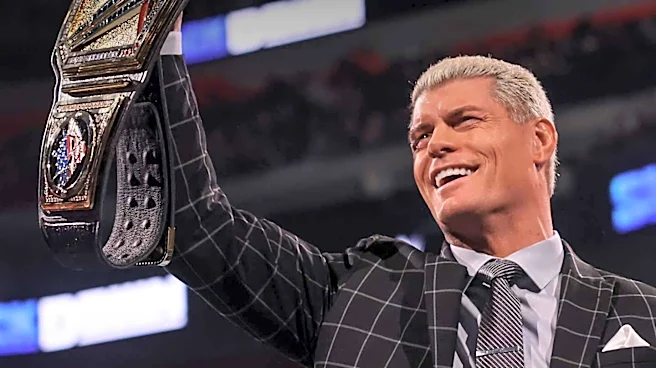
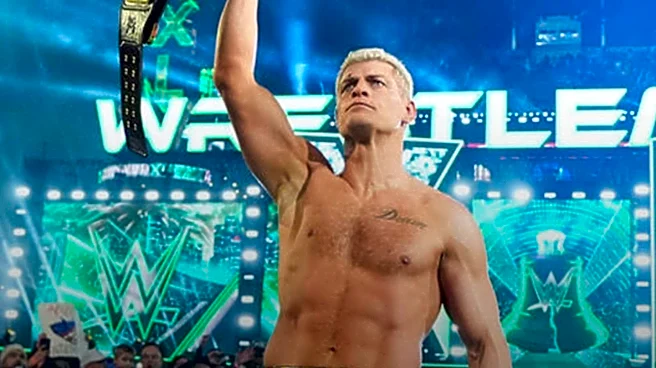
Cody Rhodes, the Undisputed WWE Universal Champion, recently stated that his crowning moment at WrestleMania XL, where he defeated Roman Reigns to 'finish his story,' was not primarily about him. Speaking on the 'Flagrant' podcast, Rhodes emphasized that Roman Reigns was the central
figure who 'changed our industry' on that night. He expressed discomfort taking full credit for the feud and his championship victory, highlighting the significant internal changes WWE was undergoing at the time, including shifts in management and potential distributors. Rhodes maintained that the moment was '110% Roman Reigns,' drawing on an old wrestling adage about top stars drawing the audience. He suggested that he was merely supporting Reigns in what he considered a pivotal event for the industry, rather than being the sole focus.
Why It's Important?
This perspective from Cody Rhodes is significant for the professional wrestling industry, particularly WWE, as it redefines the narrative around one of its most anticipated and celebrated championship victories. By crediting Roman Reigns with the industry-changing impact of WrestleMania XL, Rhodes shifts the focus from individual achievement to the broader influence of a rival and the collective evolution of the company. This could influence how future storylines are framed, potentially emphasizing collaborative efforts and the impact of multiple key figures rather than solely focusing on a single protagonist's journey. For fans, it offers a deeper insight into the mindset of a top performer and challenges the conventional 'hero's journey' narrative, promoting a more nuanced understanding of success within the highly competitive and theatrical world of professional wrestling. It also underscores the importance of established stars like Reigns in elevating the entire product.
What's Next?
Cody Rhodes' comments could lead to various reactions within the WWE and among its fanbase. It might spark further discussion about the roles of individual wrestlers versus the collective impact of the roster and management in major events. This perspective could also influence future promotional strategies, potentially leading WWE to highlight the contributions of multiple stars in building major storylines, rather than solely focusing on one. For Rhodes himself, this humble stance might further endear him to fans who appreciate his grounded approach, or it could be interpreted as a strategic move to maintain a certain public image. It remains to be seen if this viewpoint will be integrated into future WWE programming or if it will primarily remain a topic of discussion outside the main narrative. The ongoing dynamic between Rhodes and other top-tier talent, particularly Roman Reigns, will likely continue to be a focal point.
Beyond the Headlines
Rhodes' statement delves into the often-unseen complexities of professional wrestling, where the lines between individual performance and collective storytelling are blurred. His refusal to take sole credit for a career-defining moment highlights the collaborative nature of the industry, where even the most prominent stars acknowledge the contributions of their opponents and the broader organizational context. This perspective challenges the typical 'face of the company' narrative, suggesting that the success of major events is a shared endeavor. It also touches upon the psychological aspects of being a top performer, where managing ego and acknowledging the contributions of others can be crucial for long-term success and maintaining a positive public image. This nuanced view could foster a greater appreciation for the intricate dynamics that drive professional wrestling beyond the immediate spectacle of a match.