






What's Happening?
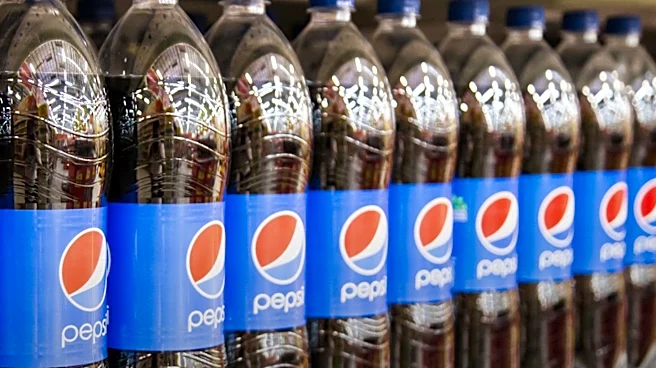
PepsiCo is set to eliminate approximately 1,000 jobs across its North American food and beverage operations. This decision, announced on November 9 in an internal memo by Ram Krishnan, CEO of PepsiCo North America, aims to simplify the company's organizational
structure, reduce costs, and enhance performance. The job reductions, which represent less than 1% of PepsiCo's 125,000 U.S. employees, are expected to be implemented over the coming week. Specific details regarding affected locations, departments, and job categories have not yet been disclosed. This restructuring comes as PepsiCo faces a period of slowing demand in its North American business, particularly within its beverage segment, which saw a 2% volume decline in the third quarter. Food volume remained flat during the same period. The company also revised its 2026 adjusted earnings-per-share growth outlook downwards, from an initial forecast of 4%-6% to 1%-2%.
Why It's Important?
This significant workforce reduction by PepsiCo underscores broader challenges within the consumer products industry, particularly for large corporations navigating evolving consumer preferences and cost pressures. The move signals a strategic shift towards greater operational efficiency and cost control in response to market headwinds. For the affected employees, the job cuts will have direct and immediate financial and professional consequences. For PepsiCo, the restructuring is intended to improve profitability and streamline decision-making processes, potentially leading to a more agile and competitive organization. The company's revised earnings outlook reflects a more cautious stance on future growth, which could influence investor confidence and market perceptions of the food and beverage sector. This action also highlights the ongoing pressure from activist investors, such as Elliott Investment Management, who acquired a substantial stake in PepsiCo in 2025 and have advocated for improved operating performance.
What's Next?
The 1,000 job cuts are expected to be implemented within the coming week, with further details on specific departments and locations likely to emerge. PepsiCo will need to manage the transition carefully to minimize disruption and maintain employee morale among its remaining workforce. The company will also be closely watched by investors and market analysts for signs that these restructuring efforts are yielding the desired improvements in financial performance and operational efficiency. Competitors in the food and beverage sector may also observe PepsiCo's strategy to assess potential impacts on their own market positions and consider similar cost-cutting or restructuring measures. The long-term success of this initiative will depend on PepsiCo's ability to adapt to changing consumer demands while maintaining its market leadership in key categories.
Beyond the Headlines
The job cuts at PepsiCo reflect a broader trend of large corporations re-evaluating their operational models in response to economic shifts and evolving consumer behavior. Beyond immediate cost savings, this restructuring could signify a strategic pivot towards automation, digital transformation, or a more focused product portfolio. The emphasis on 'reducing organizational complexity' and 'accelerating decision-making' suggests a move towards a leaner, more responsive corporate structure, which could set a precedent for other industry giants. The impact on local economies where these jobs are eliminated could be significant, potentially leading to ripple effects in related service industries. Furthermore, the ongoing influence of activist investors like Elliott Investment Management highlights the increasing pressure on public companies to prioritize shareholder value through operational optimization, even if it involves substantial workforce reductions.