




What's Happening?
Elon Musk, CEO of SpaceX, stated that the company's planned Starbase Louisiana facility could eventually handle 10,000 Starship launches annually. This projection significantly exceeds the Federal Aviation Administration's (FAA) estimate of 10,000 total
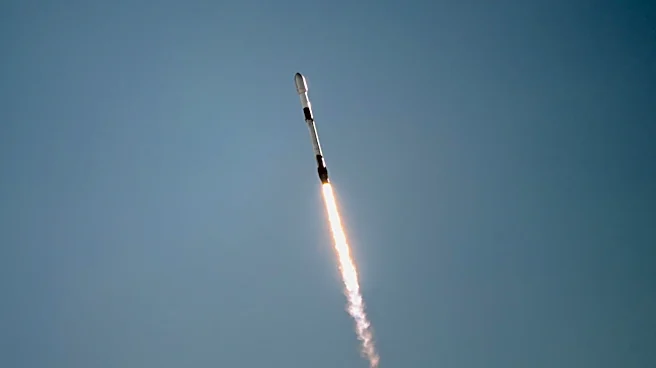
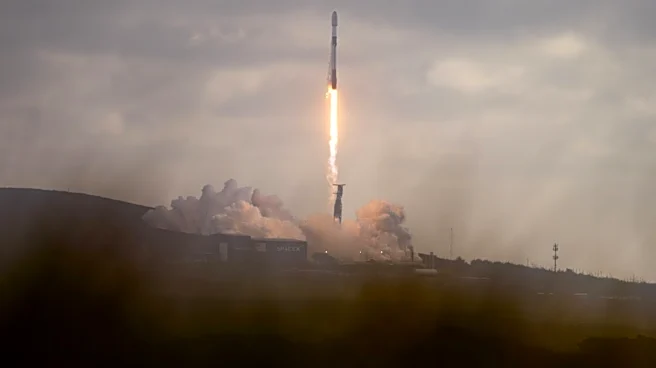
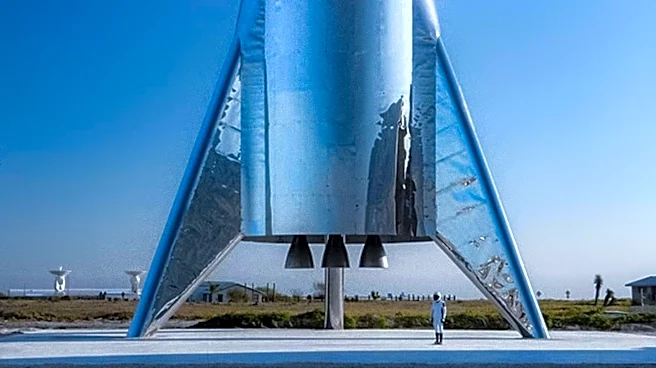
U.S. launches and re-entries annually by 2035. Musk made this comment on X, responding to a discussion about SpaceX's feedback to the FAA regarding new spaceports and priority airspace corridors. SpaceX plans to invest approximately $100 billion to develop this new spaceport near Pecan Island in Vermilion Parish, Louisiana, which is expected to be its largest launch complex. Construction is slated to begin in 2027, with the first launch targeted for 2029. SpaceX currently operates Starship launches from Starbase, Texas, and Falcon rocket launches from Florida's Kennedy Space Center, Cape Canaveral Space Force Station, and California's Vandenberg Space Force Base.
Why It's Important?
Musk's ambitious projection highlights SpaceX's long-term vision for an unprecedented launch cadence, which is crucial for its goals of deploying vast Starlink constellations, supporting lunar missions, and eventually enabling human colonization of Mars. The development of Starbase Louisiana as the world's largest spaceport signifies a massive expansion of U.S. space infrastructure and a substantial economic investment. However, SpaceX has also raised concerns that the FAA's current air traffic control systems are outdated and incapable of supporting such a high volume of launches. This suggests a potential bottleneck that could hinder the growth of the commercial space industry and the realization of SpaceX's objectives. The company's proposals for dedicated launch corridors, faster approvals, and real-time flight tracking underscore the need for significant modernization in regulatory and operational frameworks to accommodate the rapidly evolving space sector.
What's Next?
SpaceX will proceed with the development of its Louisiana Starbase, with construction expected to commence in 2027 and the first launch targeted for 2029. Concurrently, the company will continue its engagement with the FAA to advocate for necessary reforms in air traffic control and regulatory processes. The FAA will need to evaluate SpaceX's proposals for dedicated launch corridors and expedited approvals to determine how to best accommodate the projected increase in launch frequency without disrupting commercial aviation. The success of these discussions and the implementation of modernized systems will be critical for SpaceX to achieve its ambitious launch targets. The development of the Louisiana facility will also involve significant environmental assessments and community engagement, given its scale and potential impact. The progress of this new Starbase will be closely watched as a bellwether for the future of high-volume space operations in the U.S.
Beyond the Headlines
The tension between SpaceX's aggressive expansion plans and the FAA's existing regulatory and infrastructure capabilities points to a broader challenge facing the rapidly growing commercial space industry. The potential for 10,000 annual launches from a single facility, as envisioned by Musk, would necessitate a fundamental rethinking of airspace management, safety protocols, and environmental regulations. This scale of operations could transform the economic landscape of the Gulf Coast region, creating a new hub for aerospace innovation and manufacturing. However, it also raises complex questions about the environmental impact of such frequent launches, including noise pollution and emissions. Furthermore, the need for dedicated launch corridors and real-time flight tracking highlights the increasing integration of space operations into national airspace, demanding advanced technological solutions and inter-agency coordination. The outcome of these developments will not only shape the future of space travel but also influence how national infrastructure adapts to the demands of a new space age.