






What's Happening?
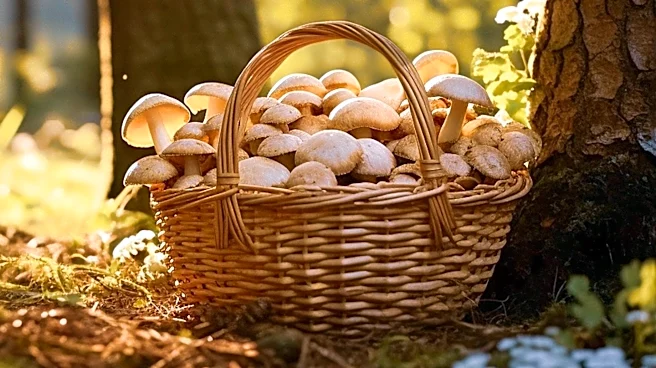
Mushroom foraging is gaining recognition as a unique and slower-paced outdoor activity in Colorado, offering participants a chance to connect with nature beyond traditional high-speed pursuits. Unlike activities focused on speed or distance, mushroom
forays encourage careful observation and exploration of forest ecosystems. Participants learn to identify various fungi, from edible species like ruby porcini to unique organisms like slime mold, often guided by experts. The activity involves searching the forest floor, examining mushrooms in situ, and performing sensory analyses to aid identification. Colorado's mushroom hunting season typically runs from April to October, with summer and early fall being prime times, especially after rainy periods. Enthusiasts use apps like iNaturalist to catalog findings, contributing to a worldwide database and aiding scientific understanding of fungi, of which only about 5% have been named globally.
Why It's Important?
Mushroom foraging offers significant benefits beyond simple recreation. It promotes a deeper appreciation for biodiversity and ecological processes, as participants learn about the intricate roles fungi play in forest health. This activity encourages mindfulness and a slower pace of engagement with the natural world, contrasting with the often fast-paced nature of modern life. Foraging can also foster a sense of community, as individuals often join clubs or guided forays to share knowledge and experiences. Furthermore, by contributing data to platforms like iNaturalist, amateur mycologists play a role in scientific discovery and conservation, helping to map and understand the distribution of fungal species, many of which are still unknown.
What's Next?
As interest in outdoor activities that promote mindfulness and connection with nature grows, mushroom foraging is likely to see increased participation in Colorado and other regions. Local mushroom clubs and guided forays will continue to be popular avenues for newcomers to learn from experienced mycophiles. Educational resources, including apps and field guides, will likely evolve to support this growing interest. Conservation efforts may also benefit from increased public engagement, as more people become aware of the importance of fungal ecosystems. Continued research into fungi, aided by citizen science contributions, will further expand our understanding of these often-overlooked organisms.
Beyond the Headlines
Mushroom foraging taps into a primal human connection with nature, reminiscent of hunter-gatherer instincts, offering a unique blend of discovery, education, and sensory experience. It challenges the conventional view of outdoor recreation as solely high-impact or adrenaline-driven, promoting a more contemplative and detailed interaction with the environment. Ethically, the practice encourages responsible foraging, emphasizing minimal disturbance to the forest floor and understanding local regulations. This activity also highlights the vast unknown in the natural world, with only a fraction of fungal species identified, underscoring the ongoing potential for discovery even in seemingly familiar landscapes. It fosters a sense of wonder and curiosity, reminding participants of the intricate and often hidden beauty of the natural world.