



What's Happening?
Fitness experts and health professionals are highlighting the critical importance of core strength for overall health, functional movement, and healthy aging, moving beyond the aesthetic pursuit of 'six-pack abs.' According to Jim White, R.D.N., A.C.S.M.,
owner of Jim White Fitness and Nutrition Studios, building and maintaining core strength significantly reduces the risk of falls and injuries, especially as individuals age. A strong core supports better balance, mobility, and posture, which are essential for daily activities like carrying groceries or bending to tie shoes. Strengthening deep core muscles also contributes to pelvic floor health, helping to prevent issues such as incontinence in both men and women. The focus is shifting towards comprehensive core routines that integrate various exercises for sustained benefits, rather than solely relying on traditional crunches.
Why It's Important?
This emphasis on functional core strength has significant implications for public health and fitness trends in the U.S. By promoting core workouts that prioritize injury prevention and daily functionality, healthcare providers and fitness professionals can help reduce the burden of age-related injuries and improve the quality of life for an aging population. For the fitness industry, this means a potential shift in popular workout programs and equipment, favoring holistic core training methods over those focused purely on superficial muscle development. Individuals stand to gain improved physical independence and a reduced risk of chronic pain, while the healthcare system could see a decrease in treatment costs associated with falls and mobility issues. This approach also encourages a more sustainable and inclusive view of fitness, making it accessible and beneficial for people of all ages and fitness levels.
What's Next?
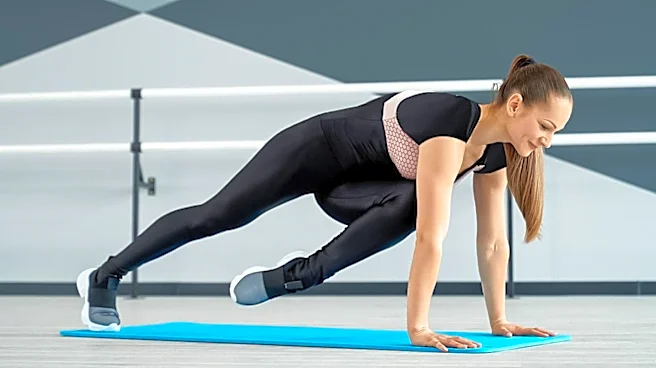
The trend towards functional core training is likely to continue influencing fitness program development and personal training methodologies. Expect to see more gyms and online platforms offering specialized classes and routines that incorporate exercises like hollow body holds, hip dips, bird dogs, and planks, which are recommended for their effectiveness in building a strong, stable core. Educational campaigns from health organizations may also increasingly promote the broader health benefits of core strength. Individuals are encouraged to adopt a regular core workout routine, aiming for at least five exercises with 10-20 slow, controlled repetitions, as advised by experts. This shift will likely lead to a greater public understanding of core muscles' role beyond aesthetics, fostering a more health-oriented approach to fitness.
Beyond the Headlines
The re-evaluation of core training extends beyond physical benefits, touching upon broader cultural perceptions of fitness and body image. By de-emphasizing the aesthetic 'six-pack' and promoting functional strength, there's an opportunity to foster a more positive and realistic body image, moving away from often unattainable ideals. This shift can empower individuals to pursue fitness for well-being rather than superficial appearance, potentially reducing pressures related to body image. Furthermore, the focus on preventing age-related injuries through core strength highlights a proactive approach to health, encouraging lifelong physical activity and independence. This could lead to a societal change where fitness is viewed as a fundamental component of preventative healthcare, contributing to a healthier and more active population across all age groups.