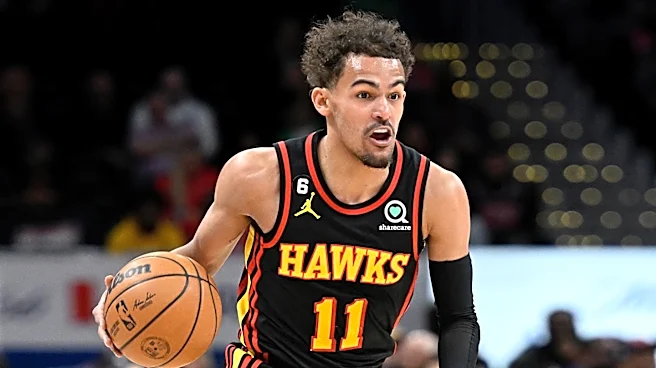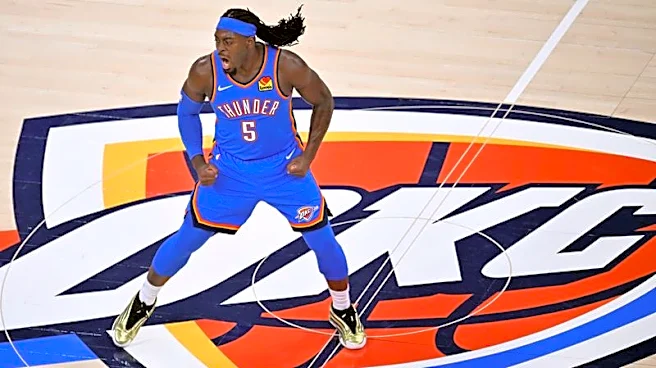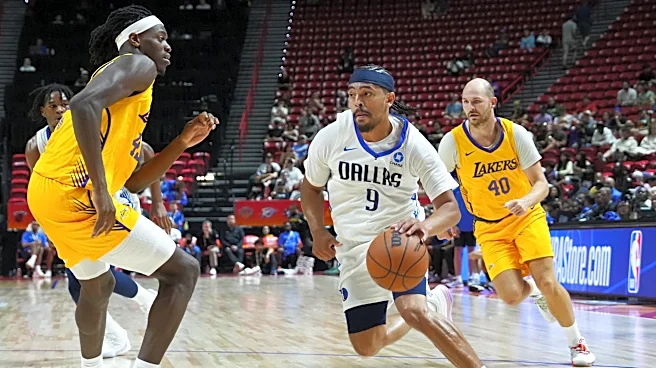












What's Happening?
The Oklahoma City Thunder have traded Lu Dort to the Atlanta Hawks in a strategic move to avoid the NBA's second tax apron. This trade is part of a broader effort by the Thunder to manage their financial obligations under the current Collective Bargaining
Agreement (CBA). The trade also involved sending three second-round picks to Oklahoma City, with Zaccharie Risacher moving to the Dallas Mavericks and Ryan Nembhard to Atlanta. This move reflects the financial strategies teams are employing to maintain competitiveness while adhering to league financial regulations.
Why It's Important?
The trade of Lu Dort underscores the financial complexities NBA teams face under the CBA. By avoiding the second tax apron, the Thunder aim to maintain financial flexibility and competitiveness. This move highlights the challenges teams encounter in balancing talent acquisition with financial constraints. The decision also reflects broader trends in the NBA, where teams are increasingly cautious about exceeding financial thresholds that could limit their long-term strategic options. The trade's implications extend beyond Oklahoma City, influencing how other teams approach their financial and competitive strategies.
What's Next?
As the NBA season progresses, teams will continue to navigate the financial landscape shaped by the CBA. The Thunder's trade may prompt other teams to reassess their financial strategies, particularly those nearing the second tax apron. The impact of this trade on team dynamics and performance will be closely watched, as will the broader implications for league-wide financial management. Stakeholders, including team executives and financial analysts, will likely evaluate the effectiveness of such trades in achieving competitive and financial goals.