




What's Happening?
Jaguar Land Rover (JLR) has officially debuted the 2027 Range Rover Electric, a new battery-electric vehicle (BEV) variant that will be sold alongside its internal combustion and plug-in hybrid counterparts. This launch signifies JLR's continued transition
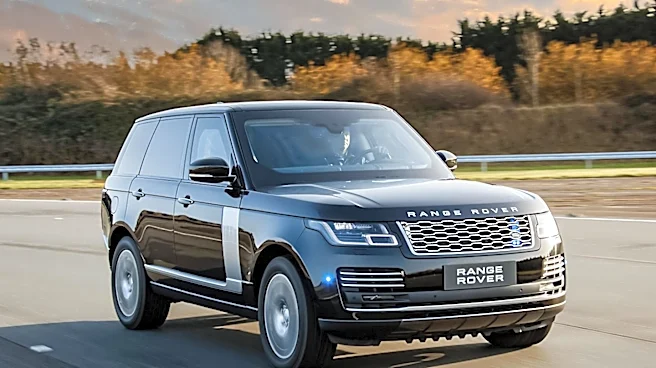
towards electrification, a plan that has faced delays due to global challenges like pandemics and supply chain issues. The new electric Range Rover is designed to maintain the luxury SUV's core identity, looking almost identical to other versions, with subtle aerodynamic enhancements such as a smoother front grille and more aero-efficient wheels. A key differentiator is the absence of tailpipes and a flat underbody. The vehicle is built on JLR's MLA architecture, which was designed to accommodate various powertrains. The BEV model weighs only 165 lbs (75 kg) more than the V8 version, as weight savings from removing differentials and driveshafts largely offset the added weight of the battery and drive units. It features identical permanent-magnet synchronous motors at the front and rear, each producing 349 hp (260 kW), for a combined output of 542 hp (404 kW) and 627 lb-ft (850 Nm).
Why It's Important?
The introduction of the 2027 Range Rover Electric is a significant development in the luxury automotive market and for the broader U.S. electric vehicle landscape. With a starting price of $138,000, it offers a more accessible entry point into the electric luxury SUV segment compared to high-priced restomod electric Range Rovers, while providing modern safety features and OEM support. The reported 80,000 'hand-raisers' for the vehicle, with half from North America and 70% being new to the brand, indicate substantial consumer interest and potential for market disruption. This suggests a growing demand for premium electric SUVs that do not compromise on performance or off-road capability. The vehicle's estimated 333-mile (536 km) EPA range and fast-charging capabilities (125 miles in 10 minutes) address common consumer concerns about EV practicality. Furthermore, the inclusion of a native NACS port and Supercharger access for U.S. models, along with future vehicle-to-grid (V2G) support, positions the Range Rover Electric as a competitive player in the evolving EV infrastructure and energy management ecosystem.
What's Next?
Following its debut, the 2027 Range Rover Electric will move towards production and delivery, with JLR aiming to convert the significant pre-launch interest into actual sales. The company will likely focus on fulfilling orders, particularly for the 40,000 North American 'hand-raisers,' and expanding its charging infrastructure partnerships to support the new model. The integration of vehicle-to-grid (V2G) support, planned for the future, will be a key development to watch, as it could enhance the vehicle's utility beyond transportation, allowing it to serve as a power source for homes or the grid. Competitors in the luxury EV segment will be closely observing the market reception and sales performance of the Range Rover Electric, potentially influencing their own electrification strategies and product development timelines. The success of this model could accelerate the shift towards electric powertrains in the high-end SUV market, prompting other manufacturers to introduce or expand their electric offerings.
Beyond the Headlines
The launch of the 2027 Range Rover Electric extends beyond mere product introduction; it reflects a broader industry trend where established luxury brands are adapting to environmental regulations and evolving consumer preferences for sustainable mobility. The decision to maintain the iconic Range Rover design while integrating an electric powertrain underscores a strategy to appeal to both loyal customers and new EV adopters who seek familiarity and prestige alongside environmental consciousness. The high percentage of new customers and existing EV owners among those expressing interest suggests that the brand is successfully attracting a diverse demographic, potentially reshaping the traditional luxury car buyer profile. This move also highlights the increasing importance of robust charging infrastructure and advanced battery technology in the premium segment. The vehicle's off-road capabilities, maintained despite its electric nature, challenge the perception that EVs are solely urban vehicles, potentially opening new market segments and use cases for electric SUVs.