




What's Happening?
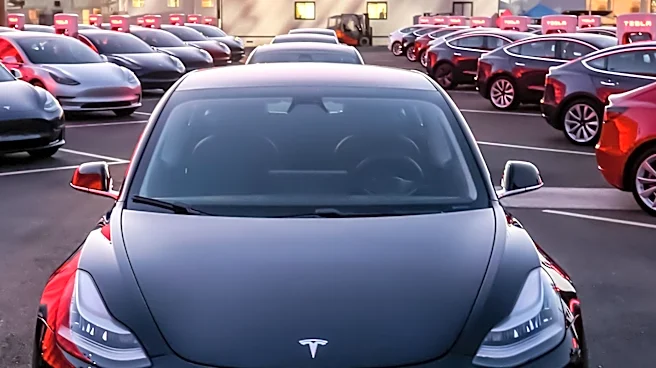
Hoffman EV, a Wisconsin-based company founded by Geoffrey Hoffman, is converting older Tesla Model 3s into minivans, dubbed 'The Badger.' This initiative aims to fill a market gap for a Tesla minivan, which the automaker has never produced. The Badger reuses
the battery, motors, computers, cameras, interior screens, wiring, and seats from donor Model 3s, wrapping them in a new aluminum body. The vehicle was recently showcased at the SEMA trade show in Las Vegas. Hoffman describes it as a 'dorky-looking' EV that combines elements of an off-road vehicle, a cargo van, and a Tesla recycling project. The company plans to target 2027 for reservations and production, aiming to build approximately 100 units annually, with a projected cost of around $70,000, including a $20,000 donor Model 3.
Why It's Important?
Hoffman EV's 'Badger' project is significant as it represents an innovative approach to electric vehicle development and market segmentation. By repurposing existing Tesla components, the company bypasses the immense capital and time required to build a car from scratch, offering a more agile response to consumer demand. This venture highlights a growing trend of smaller companies identifying and addressing niche markets within the broader EV landscape, particularly as larger automakers have struggled with the adoption of expensive electric trucks. For the U.S. automotive industry, this demonstrates the potential for creative solutions and circular economy principles in EV manufacturing, utilizing existing resources to create new products. It also offers consumers a unique alternative in the EV market, catering to those who desire a minivan form factor with Tesla's underlying technology.
What's Next?
Hoffman EV is targeting 2027 for the commencement of reservations and production for 'The Badger.' The company aims to produce around 100 units annually, with a target price of approximately $70,000, which includes the cost of a donor Tesla Model 3. Key challenges remain, such as improving the current highway range of about 150 miles to a target of 200 miles and addressing potential issues with Tesla's software and Supercharger network access, as Tesla has no direct involvement with the project. Hoffman EV is also considering whether to sell fully assembled vehicles or kits for customers to build themselves. The success of 'The Badger' will depend on its ability to meet these technical and logistical hurdles and attract its target niche market.
Beyond the Headlines
The 'Badger' project by Hoffman EV touches upon several deeper implications within the automotive and sustainability sectors. It exemplifies the concept of upcycling and circular economy principles in manufacturing, where components from existing vehicles are given a new life, potentially reducing waste and resource consumption. This approach could inspire other entrepreneurs to explore similar repurposing strategies, fostering a more sustainable automotive ecosystem. Furthermore, the project highlights the tension between large-scale OEM control over technology (like Tesla's software and charging network) and the innovation driven by smaller, independent ventures. The 'Badger' serves as a case study for how third-party modifications can push the boundaries of vehicle design and functionality, even without direct manufacturer endorsement, potentially influencing future discussions around vehicle customization and intellectual property in the EV space.