








What's Happening?
Pete Townshend, co-founder and principal songwriter of The Who, believes that the cultural role of rock and roll has shifted, with rap and hip-hop now serving as the modern voices of youth and social tension. Townshend clarified that he does not view
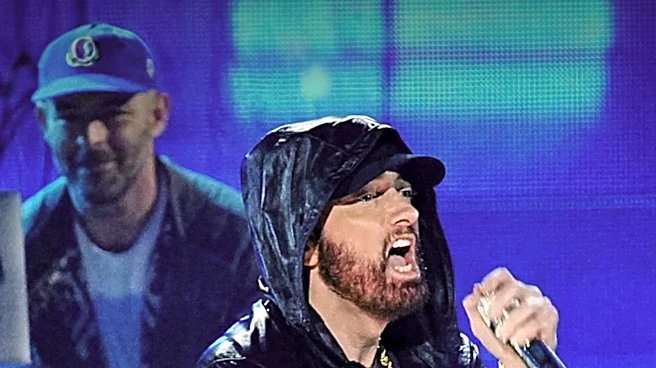
this as rock 'losing' to other genres, but rather as a natural evolution where the cultural function has changed hands. He noted that rock and roll originated as street music, but as white musicians and their audiences moved away from the streets, rap and hip-hop filled that void. Townshend sees these genres not as adversaries to rock, but as continuations of rock's historical role in reflecting social tension and offering identity or escape to a generation. He expressed admiration for artists like Eminem, recognizing their ability to transform conflict and social environments into music that resonates directly with their audience.
Why It's Important?
This perspective from a legendary rock figure like Pete Townshend is significant as it acknowledges the evolving landscape of popular music and its cultural impact. It challenges the notion of genre rivalry, instead highlighting the shared social function of music across different eras. For the U.S. music industry, this viewpoint underscores the enduring power of genres like rap and hip-hop to connect with younger audiences and address contemporary societal issues, much like rock and roll did in its prime. It also suggests a broader understanding of music's role beyond mere entertainment, emphasizing its capacity to serve as a voice for social commentary and generational identity. This recognition from an established artist could foster greater cross-genre appreciation and collaboration, influencing future musical trends and audience engagement.
What's Next?
Townshend's comments could encourage further dialogue within the music community about the social and cultural roles of different genres. This might lead to more artists and industry figures reflecting on how music can continue to serve as a platform for youth expression and social commentary. For emerging artists in rap and hip-hop, this validation from a rock icon could further solidify their position as leading cultural voices. It may also prompt music historians and critics to re-evaluate the historical trajectory of popular music, focusing on its functional evolution rather than just stylistic changes. This shift in perspective could influence how music education programs are structured and how new talent is identified and nurtured, emphasizing authenticity and social relevance alongside musical skill.
Beyond the Headlines
Beyond the immediate discussion of music genres, Townshend's observations touch upon deeper societal shifts. His statement implies that the 'street' and its associated social tensions continue to be fertile ground for artistic expression, regardless of the musical form it takes. This highlights the ongoing need for art that speaks to the experiences of marginalized or disaffected youth. It also subtly critiques the commercialization and mainstreaming of rock, suggesting that as a genre becomes more established and its audience more affluent, it may lose some of its raw, rebellious edge. This raises questions about the authenticity and social responsibility of popular music, and how artists can maintain a connection to their roots and continue to challenge the status quo, even as they achieve mainstream success.