





What's Happening?
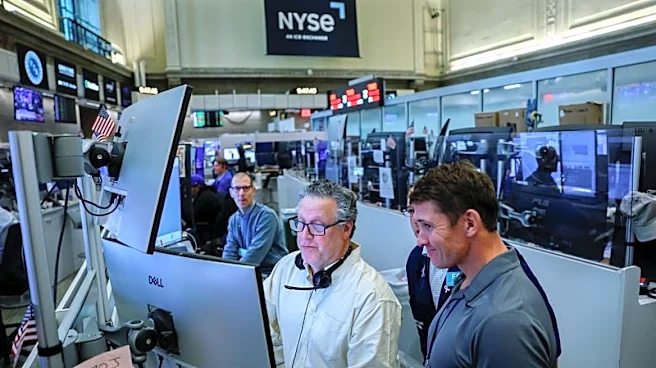
Refiner stocks, including Valero, Marathon, and Phillips 66, experienced their worst trading day since the tariff announcement in April 2025. The three companies collectively lost over $20 billion in market value due to concerns that tariffs would reduce
fuel consumption. This decline was primarily driven by a shrinking gap between fuel prices and crude costs, as fuel prices fell faster than crude. Heating oil futures, a benchmark for diesel, dropped by 2.79% to $4.7752 per gallon, while RBOB gasoline decreased by 2.51% to $3.1376. Concurrently, West Texas Intermediate (WTI) crude lost 1.83%, and Brent crude fell by 1.67%. Valero's stock saw its most significant single-day drop since April 3, 2025, while Marathon's was the worst since April 10, 2025, and Phillips 66's since May 21, 2025. The VanEck Oil Refiners ETF (CRAK), which includes a global mix of refiners, saw a smaller decline of 3.73%, indicating that foreign refiners are less affected by U.S. margin pressures.
Why It's Important?
The substantial drop in refiner stocks highlights the significant impact of tariff policies and their potential to disrupt the U.S. energy market. The core issue for refiners is the narrowing of profit margins when the price of refined products (like gasoline and heating oil) falls more rapidly than the cost of crude oil. This scenario, exacerbated by tariff concerns, directly affects the profitability and market valuation of major U.S. refiners. The market's reaction suggests that investors are pricing in a potential 'margin unwind,' anticipating that the current favorable refining margins may not be sustainable. This could lead to reduced investment in the refining sector, potentially impacting future fuel supply and prices for consumers. The disparity in performance between U.S. domestic refiners and the broader global refiner ETF also underscores how U.S.-specific trade policies can create localized economic pressures, affecting domestic industries more severely than their international counterparts.
What's Next?
The market will likely continue to monitor the trajectory of fuel and crude oil prices, as well as any further developments in U.S. tariff policies. The President's promise of cheaper gasoline suggests potential future interventions or policy shifts that could further influence refining margins. Investors will be closely watching for signs of whether the current margin compression is a temporary blip or a more sustained trend. Refiners may need to adjust their operational strategies, potentially focusing on cost efficiencies or diversifying their product offerings to mitigate the impact of volatile price spreads and tariff-related uncertainties. The performance of the VanEck Oil Refiners ETF (CRAK) suggests that companies with a more diversified global refining footprint might be better positioned to weather U.S.-specific trade challenges, potentially influencing investment strategies within the sector.
Beyond the Headlines
The refiner stock decline extends beyond immediate financial losses, touching upon the broader economic implications of trade policies. The 'tariff shock' of April 2025 and its lingering effects demonstrate how protectionist measures, intended to achieve specific economic goals, can have complex and sometimes unintended consequences across interconnected industries. The mechanism of tariffs impacting fuel demand, and subsequently refining margins, illustrates the intricate relationship between trade policy, commodity markets, and corporate profitability. Furthermore, the observation that tariffs disproportionately affect U.S. buyers and can weigh more heavily on middle- and low-income households, as noted in economic analyses, suggests a broader societal cost beyond corporate balance sheets. This event underscores the ongoing debate about the effectiveness and distributional impacts of tariffs, highlighting the need for careful consideration of their full economic and social ramifications.