

What's Happening?
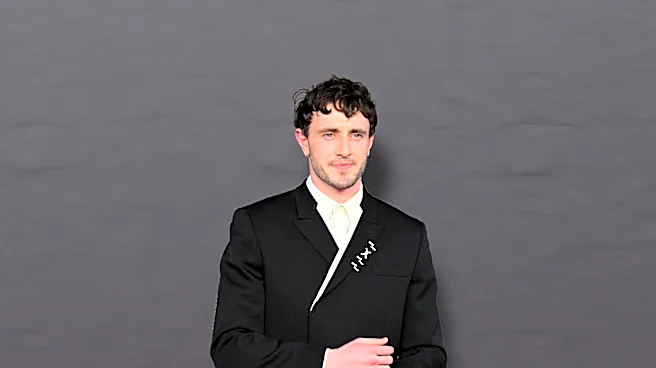
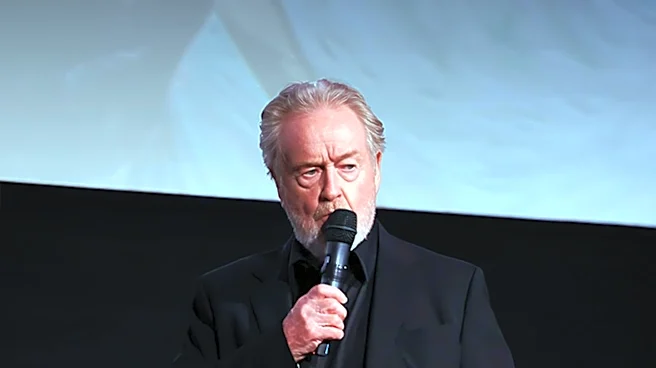
Ridley Scott's representative has issued a denial regarding claims of a feud between the director and actor Paul Mescal. Reports had circulated, notably from Puck's newsletter 'What I'm Hearing' by journalist Matthew Belloni, suggesting that Scott blamed
Mescal for the 'lukewarm reception' of 'Gladiator II' and believed Mescal was not 'manly' enough for the role. These reports further alleged that Mescal was subsequently replaced by Jacob Elordi in Scott's upcoming film, 'The Dog Stars,' due to this dissatisfaction. However, Scott's spokesperson explicitly stated to Entertainment Weekly that these claims are 'Not true,' emphasizing that Scott 'loves Paul and was excited to work with him on Dog Stars after having enjoyed such a great collaboration on Gladiator II.' The representative clarified that Mescal's departure from 'The Dog Stars' was due to scheduling conflicts related to his involvement in Sam Mendes' four-film Beatles project, where he is set to play Paul McCartney. Scott himself had previously acknowledged in late 2024 that Mescal's schedule was 'stacked up' with the Beatles movies, indicating a potential need to replace him for 'The Dog Stars.'
Why It's Important?
This clarification is important for several reasons within the entertainment industry. Firstly, it addresses and potentially mitigates negative speculation surrounding the professional relationship between a highly respected director like Ridley Scott and a rising star like Paul Mescal. Unsubstantiated rumors of creative disagreements or dissatisfaction can impact an actor's career trajectory and a director's reputation for fostering collaborative environments. Secondly, it highlights the complex logistical challenges in film production, particularly for in-demand actors who often juggle multiple high-profile projects. Scheduling conflicts are a common, yet often overlooked, reason for casting changes, and this incident underscores how such practicalities can be misconstrued as personal or professional disputes. Finally, the initial reports about Mescal's 'masculinity' and its alleged impact on 'Gladiator II's' performance touch upon broader discussions within Hollywood regarding casting choices, audience perception, and the often-subjective nature of critical and commercial success. The film, despite grossing $462 million and holding an 80 percent positive rating on Rotten Tomatoes, was perceived by some as weaker than its predecessor, illustrating the high expectations placed on sequels to iconic films.
What's Next?
Moving forward, the focus will likely shift to the upcoming projects of both Ridley Scott and Paul Mescal. Scott will continue with 'The Dog Stars' featuring Jacob Elordi, and the film's reception will be observed, especially in light of the earlier casting discussions. For Paul Mescal, his commitment to Sam Mendes' Beatles biopic series is a significant undertaking, and his portrayal of Paul McCartney will be a major point of interest. The success of these projects will further define the careers of both individuals. The incident also serves as a reminder for media outlets to verify information, especially when dealing with sensitive claims about professional relationships in the entertainment industry. Future reports concerning casting decisions or film performances may be scrutinized more closely for underlying reasons beyond initial speculation. The box office performance of 'Gladiator II' and the subsequent 'The Dog Stars' will continue to be analyzed, contributing to ongoing industry discussions about the financial viability and critical reception of major studio productions.
Beyond the Headlines
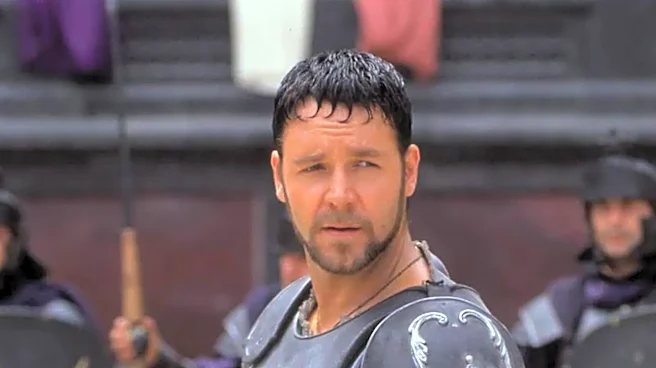
Beyond the immediate news, this situation subtly highlights the intense pressure and scrutiny faced by actors and filmmakers in high-stakes productions, particularly sequels to beloved classics. Paul Mescal, stepping into a role previously defined by an Oscar-winning performance from Russell Crowe, faced immense expectations. The initial reports, even if denied, reflect a tendency to attribute a film's perceived shortcomings to individual performances rather than the myriad of factors influencing a movie's success, such as script, direction, marketing, and overall audience sentiment. This incident also touches upon the subjective nature of 'masculinity' in film roles and how such perceptions can be weaponized in criticism. The clarification from Scott's representative underscores the importance of official statements in controlling narratives and protecting professional reputations in an era of rapid information dissemination and social media speculation. It also implicitly champions the idea that creative collaborations, even when they involve casting changes, can remain amicable and professional, driven by practical considerations rather than personal animosity.