


What's Happening?
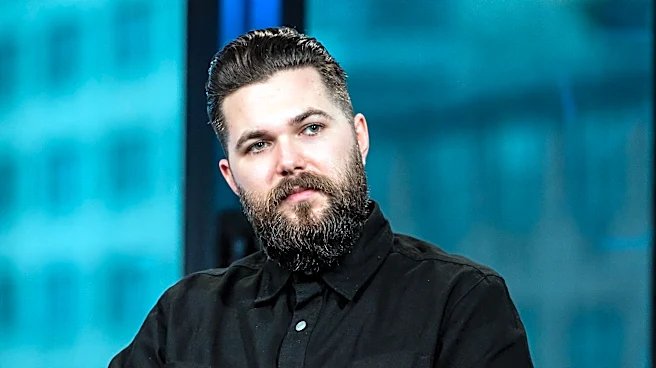
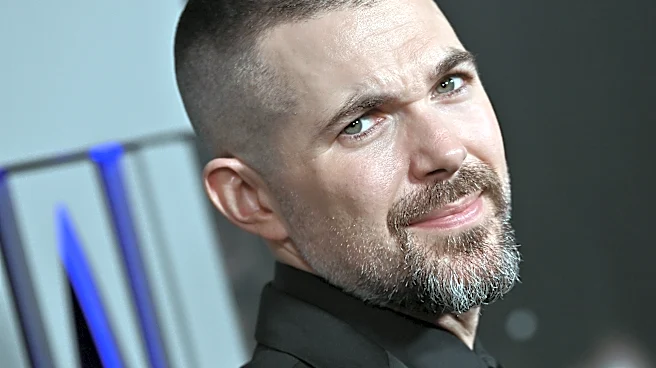
Director Robert Eggers is set to release his new film, 'Werwulf,' which aims to offer a lore-accurate reimagining of the ancient werewolf legend. The film, scheduled for release on December 25, deviates from modern werewolf mythology, such as full moon
transformations and silver bullet vulnerabilities, which are considered recent inventions from film and television. Instead, 'Werwulf' draws inspiration from a 13th-century encyclopedia, Gervase of Tillbury’s Otia Imperialia, which discusses 'men who were wolves,' and continental European myths that justified cruel criminals through demonic lycanthropy. The movie will feature characters without names, with the exception of a dog, and its dialogue will blend Middle English with Early Modern English to achieve authenticity without requiring subtitles for modern audiences. Charles Sandford will portray both the werewolf and the Devil in the film, utilizing practical effects for the creature.
Why It's Important?
This film is significant as it represents a deliberate effort to return to the more primitive and darker origins of the werewolf myth, moving away from popularized cinematic tropes. By grounding the narrative in historical texts and ancient folklore, Eggers challenges contemporary horror conventions and offers a fresh perspective on a classic monster. This approach could influence future horror productions, encouraging a deeper exploration of mythological roots rather than relying on established genre clichés. For audiences, it promises a unique and potentially more unsettling horror experience, as it taps into older, more primal fears associated with lycanthropy. The film's commitment to historical linguistic accuracy also highlights a trend in filmmaking to enhance period pieces with authentic cultural and historical details, potentially setting a new standard for historical horror.
What's Next?
As the release date of December 25 approaches, more details about 'Werwulf' are expected to emerge, potentially through additional trailers, interviews, or promotional materials. The film's reception will be closely watched by horror enthusiasts and critics, particularly regarding its success in reinterpreting the werewolf myth and its use of archaic language. If 'Werwulf' is well-received, it could pave the way for more films that delve into the historical and mythological origins of other legendary creatures, potentially sparking a new subgenre of 'lore-accurate' horror. The performances, especially Charles Sandford's dual role and the practical effects, will be key points of discussion, influencing future casting and production decisions in creature features.
Beyond the Headlines
Beyond its immediate release, 'Werwulf' could spark broader discussions about the evolution of folklore and how ancient myths are reinterpreted and adapted across different eras. The film's rejection of modern werewolf tropes underscores a cultural fascination with authenticity and a desire to reconnect with original narratives, perhaps as a response to the perceived dilution of classic stories. Ethically, the film's exploration of 'men who were wolves' as a justification for cruel criminals touches on historical societal attempts to rationalize inexplicable evil, offering a lens through which to examine human psychology and the construction of monstrous figures. This approach could encourage academic interest in the historical context of horror and the psychological underpinnings of fear, prompting a deeper appreciation for the cultural significance of monster myths.