





What's Happening?
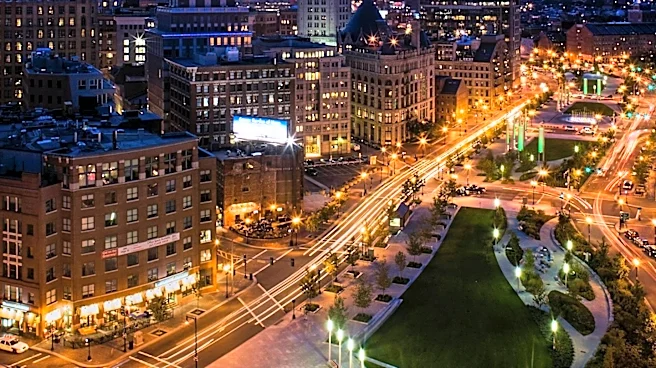
Boston Properties (BXP), a major landlord in Boston's Back Bay, is actively opposing the creation of a new business improvement district (BID) in the neighborhood. The company, which owns prominent properties like the Prudential Center and 200 Clarendon,
is escalating its efforts beyond merely voting against the district. BXP is now requesting intervention from the Wu administration to exclude its properties from the proposed BID. The company's top executive in Boston, Bryan Koop, argues that the additional fee assessed by the BID, intended to fund neighborhood improvements, constitutes 'unjust double taxation.' BXP already allocates $12 million annually for seasonal decor, security, and public-realm enhancements under existing agreements with the city related to the Prudential Center's development. The proposed BID would generate approximately $3.3 million in annual revenue, with BXP expected to contribute around $425,000 across its 15 buildings.
Why It's Important?
This dispute highlights a significant conflict between a major commercial property owner and a community initiative aimed at improving urban areas. The creation of BIDs is a common strategy in U.S. cities to enhance public spaces and services, often leading to increased property values and economic activity. BXP's opposition, particularly its claim of 'unjust double taxation,' could set a precedent for other large property owners to resist similar initiatives, potentially hindering urban development and revitalization efforts. The outcome of this battle in Back Bay could influence how BIDs are structured and implemented in other cities, affecting the funding mechanisms for public amenities and services. It also underscores the financial burden and regulatory complexities faced by large real estate entities in contributing to local community improvements.
What's Next?
The Back Bay Association, representing businesses and property owners, is collecting signatures to secure the necessary support for the BID. Under state law, a BID requires approval from holders of at least 51 percent of the assessed commercial value and 60 percent of individual parcels. If these thresholds are met, the proposal will proceed to the City Council and Mayor Michelle Wu for final approval. The city has not yet indicated a willingness to intervene in the dispute. City Councilor Sharon Durkan supports the BID, expressing disappointment in BXP's lobbying efforts. The association believes it is on track to gather sufficient support by year-end. The resolution of this conflict will determine the future of the Back Bay BID and could influence similar initiatives in other U.S. cities.
Beyond the Headlines
The conflict in Back Bay extends beyond a simple financial disagreement; it touches upon the broader question of corporate social responsibility and community engagement. While BXP argues against what it perceives as an unfair financial burden, proponents of the BID emphasize the collective benefit of a well-maintained and vibrant neighborhood. This situation reflects a tension between individual corporate interests and the collective good of urban communities. The debate also brings to light the evolving role of property owners in contributing to public services, especially in areas where existing agreements or voluntary contributions may not fully address growing community needs. The outcome could influence future discussions on how private entities and public bodies collaborate to fund and manage urban infrastructure and services.