





What's Happening?
The Rossini Opera Festival's production of 'Le Siège de Corinthe,' directed by David Livermore, has drawn significant criticism for its interpretation of the classic opera. Instead of adhering to the original narrative of Ottoman conquerors versus Christian
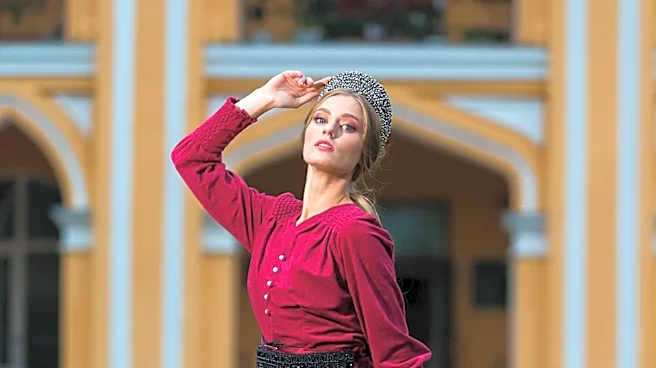
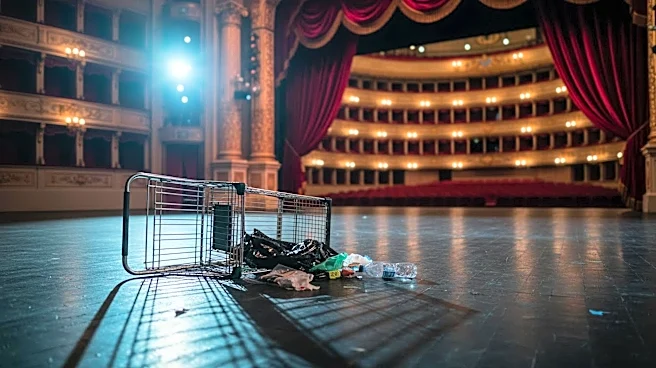
Greeks, Livermore's production reportedly replaced it with a 'sloppy allegory' focusing on modern consumerism, technology, environmental destruction, and superficiality. The Greeks were depicted in an artificial classical world, while the Ottomans were portrayed as modern figures in white suits, using prop mobile phones and taking selfies, symbolizing a shallow technological culture. Critics described the production as a 'clumsy, oafish massacre' of Rossini's work, filled with clichéd distractions such as rubbish bags, an overturned shopping trolley, plastic detritus, and dated AI imagery on a video-wall. Despite the controversial direction, the singers, including Vasilisa Berzhanskaya as Pamyra and Maxim Mironov as Néoclès, and the Orchestra del Teatro Comunale di Bologna conducted by Carlo Rizzi, were praised for their performances.
Why It's Important?
This event highlights a recurring tension in the arts between traditional interpretations and modern directorial approaches, particularly in classical opera. The criticism suggests a broader debate within cultural institutions about the balance between artistic innovation and fidelity to original works. For opera companies and festivals, such productions can impact audience reception, critical acclaim, and potentially, financial support. Audiences who seek a traditional experience may be alienated, while those open to contemporary themes might find the production thought-provoking. The use of modern allegories, especially those touching on environmental and technological themes, reflects current societal concerns, but their integration into classical works can be contentious. The strong negative reaction to this particular production underscores the importance of effective and sensitive direction that enhances, rather than competes with, the original artistic vision, especially for works with significant historical and cultural weight.
What's Next?
The Rossini Opera Festival is scheduled to continue until August 23. While this specific production has faced criticism, the festival features other works, including Jean-Pierre Ponnelle’s staging of 'L’occasione fa il ladro' and Damiano Michieletto’s 'La scala di seta,' which have been noted for their successful modern interpretations. The reception of 'Le Siège de Corinthe' may prompt discussions within the opera community regarding directorial choices and the balance between contemporary relevance and artistic integrity. Future productions at the festival and other opera houses might consider this feedback when commissioning or staging new interpretations of classical works. The ongoing debate about modernizing classical art forms will likely continue, with each new production serving as a case study for critics and audiences alike.
Beyond the Headlines
The controversy surrounding 'Le Siège de Corinthe' delves into deeper questions about the role of art in society and the interpretation of historical narratives. Rossini's original work, which explores themes of invasion, sacrifice, collective identity, and the human consequences of conquest, holds significant relevance in contemporary Europe, particularly concerning issues of identity, migration, tradition, and cultural continuity. By replacing these profound themes with an allegory of modern consumerism and technology, the production arguably missed an opportunity to engage with the opera's inherent depth and its connection to current geopolitical and social dynamics. This directorial choice raises ethical questions about whether a director's personal vision should overshadow the original intent and potential societal impact of a classical work. It also highlights the challenge of making classical art relevant to modern audiences without sacrificing its core essence, suggesting a need for interpretations that illuminate rather than obscure the original's power.