






What's Happening?
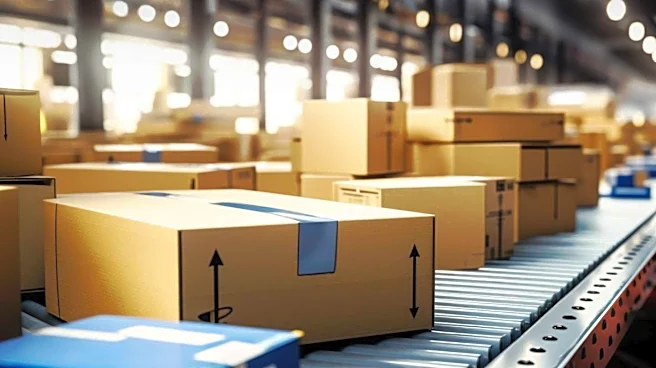
The International Trade Centre (ITC) and DHL have renewed their long-standing partnership through a memorandum of understanding aimed at supporting small and medium-sized enterprises (SMEs) in cross-border trade. This collaboration focuses particularly
on women-led businesses. The agreement leverages ITC's expertise in market intelligence, SME development, and inclusive trade, combined with DHL's extensive global logistics network and technical knowledge. SMEs are crucial to the global economy, accounting for approximately 90% of businesses, providing about 70% of employment, and contributing 70% of global GDP. Despite their significance, many SMEs face substantial barriers to fully participating in international trade. The renewed partnership seeks to dismantle these barriers and open new opportunities for small businesses worldwide. Over the past decade, ITC and DHL have worked together through initiatives like DHL GoTrade, ITC SheTrades, and the ITC ecomConnect programme, reaching SMEs in over 60 countries across Africa, ASEAN, Latin America, and the Caribbean. This collaboration has included training, tailored support, and shipping assistance, alongside advocacy efforts to ensure the voices of small businesses are heard in global trade discussions.
Why It's Important?
This renewed partnership is important because it directly addresses critical challenges faced by small and medium-sized enterprises (SMEs) in accessing international markets. SMEs are vital for economic growth and job creation globally, yet they often struggle with complex logistics, limited market intelligence, and insufficient support to navigate cross-border trade. By combining ITC's developmental expertise with DHL's logistical capabilities, the initiative provides a comprehensive support system. This is particularly significant for women-led businesses, which frequently encounter additional hurdles in international trade. The partnership's focus on improving services for business support organizations and ITC SheTrades Hubs will create a ripple effect, strengthening the ecosystem that nurtures small business growth. Furthermore, advocating for SMEs and women entrepreneurs in global discussions ensures their perspectives are integrated into policy-making, potentially leading to more inclusive trade policies and a more equitable global economy. The collaboration aims to bridge the gap between producing quality products and effectively delivering them to international customers, a common 'last-mile' challenge for many small businesses.
What's Next?
Following the renewal of their partnership, the International Trade Centre (ITC) and DHL will continue to implement and expand their joint initiatives. Their immediate focus will be on supporting small businesses with cross-border trade, encompassing exports, supply chains, and logistics. They plan to work closely with business support organizations and ITC SheTrades Hubs to enhance the services offered to small and women-led businesses. A key aspect of their ongoing efforts will be advocating for small businesses and women entrepreneurs in global discussions and high-level events, as well as engaging with private sector organizations and government agencies to amplify their voices. The partnership will build on its decade-long history of combining training with tailored support, including shipping assistance. The goal is to further strengthen the support ecosystem, enabling more SMEs to overcome logistical barriers and access new markets. The collaboration will also continue to ensure that the perspectives of small businesses are represented at decision-making tables, influencing future trade policies and opportunities.
Beyond the Headlines
Beyond the immediate benefits of enhanced logistics and market access for small businesses, this partnership between the International Trade Centre (ITC) and DHL carries deeper implications for global economic development and social equity. By specifically targeting women-led businesses, the initiative contributes to broader goals of gender equality and economic empowerment, recognizing that supporting women entrepreneurs can have a transformative impact on communities. The focus on strengthening the 'last-mile' logistics for SMEs highlights a systemic challenge in global trade, where smaller entities often lack the infrastructure and resources to compete with larger corporations. This collaboration could serve as a model for other international organizations and private sector entities to address similar disparities. Furthermore, by advocating for small businesses in global discussions, the partnership aims to shift the narrative from large-scale corporate trade to a more inclusive model that values and integrates the contributions of diverse enterprises. This could lead to a more resilient and equitable global trading system, fostering innovation and sustainable development in developing and transition countries.