

What's Happening?
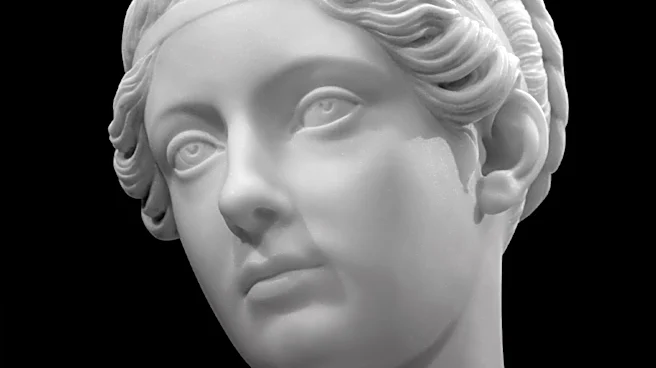
Renowned 3D Artist Sherif Dawoud has showcased his realistic reimagining of Morrigan Aensland from Capcom's Darkstalkers fighting series. Dawoud's work focuses on adding realism while maintaining the character's recognizable design. The face sculpt, in particular,
is highlighted for its lifelike and stunning quality. For the sculpting process, Dawoud primarily used ZBrush, a digital sculpting tool. The model was then rendered in Marmoset Toolbag, a real-time rendering suite. Additionally, the hair for the character was created using Geometry Nodes within Blender, a 3D computer graphics software. This project demonstrates a blend of artistic skill and advanced 3D software to bring a well-known character into a new, realistic aesthetic.
Why It's Important?
This project is important for the 3D art community and the broader entertainment industry as it exemplifies the capabilities of modern 3D sculpting and rendering tools in creating highly realistic character models. For artists, it serves as an inspiration and a benchmark for achieving lifelike detail in digital art. The use of industry-standard software like ZBrush, Marmoset Toolbag, and Blender highlights the current technological landscape for 3D production. Furthermore, the successful reimagining of an established character like Morrigan Aensland demonstrates how artists can innovate within existing intellectual properties, potentially influencing future character design and development in video games, animation, and virtual reality. This kind of work also contributes to the ongoing evolution of digital art techniques and workflows.
What's Next?
Sherif Dawoud occasionally shares tutorials, which suggests that his techniques and workflows, as demonstrated in the Morrigan Aensland project, may become more widely accessible to aspiring and professional 3D artists. These tutorials could cover specific aspects of his process, such as painting the torso and hands in ZBrush, offering valuable insights into achieving high-quality results. The continued sharing of such advanced techniques could further elevate the standards of 3D character art. Additionally, the project's visibility on platforms like ArtStation and social media indicates a potential for further engagement and discussion within the 3D art community, possibly leading to new collaborations or commissions for Dawoud.
Beyond the Headlines
Beyond the immediate artistic achievement, this project touches upon the evolving relationship between fan art and established intellectual properties. By adding a realistic take to a classic character, Dawoud not only showcases his individual talent but also contributes to a broader cultural conversation about character interpretation and adaptation. This kind of realistic rendering can influence how audiences perceive and connect with fictional characters, potentially bridging the gap between stylized game graphics and photorealistic media. It also underscores the power of digital tools to democratize artistic creation, allowing individual artists to produce work that rivals professional studio quality, thereby pushing the boundaries of what is possible in digital character design.