





What's Happening?
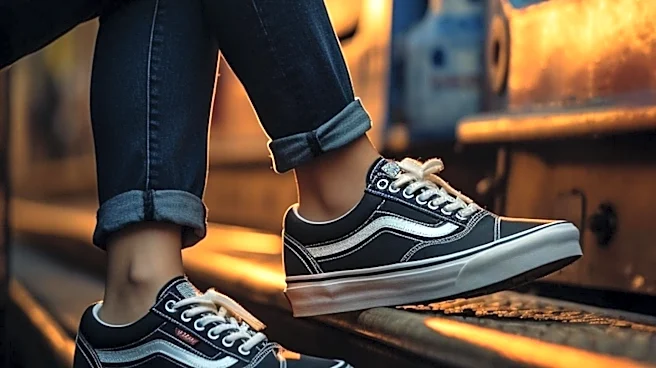
Vans, the iconic skate brand headquartered in Costa Mesa, California, has seen a substantial decrease in its annual revenue. The company's sales dropped from approximately $4.2 billion in 2022 to around $2.2 billion in 2026, marking nearly a 48% reduction.
This decline occurred despite Vans celebrating its 60th anniversary in 2026 and maintaining its status as a globally recognized brand. The primary factors cited for this downturn include the brand's increased availability across various retail channels such as malls, outlets, and discount retailers. This widespread distribution led to excess inventory and promotional pricing, which subsequently put pressure on profit margins and potentially diluted the brand's perceived exclusivity. Vans, part of VF Corporation, aims to inspire freedom and non-conformity, with a culture rooted in values like Effortless Authenticity and Radical Creativity.
Why It's Important?
The significant revenue decline at Vans highlights critical challenges faced by established brands in maintaining market position and brand value. The issue of over-distribution and subsequent loss of exclusivity can severely impact a brand's appeal, especially for those that once cultivated a 'cult following.' This situation demonstrates how rapid growth and broad market penetration, while initially appearing beneficial, can erode the unique selling proposition that attracted loyal customers. For the U.S. retail industry, this serves as a case study on the delicate balance between accessibility and brand prestige. Companies must carefully manage their distribution strategies to avoid diluting their brand identity and value, as consumers often associate exclusivity with quality and desirability. The experience of Vans suggests that prioritizing widespread availability without careful consideration of brand perception can lead to substantial financial setbacks.
What's Next?
To address the revenue decline, Vans may need to re-evaluate its distribution strategy and potentially scale back its presence in discount and mass-market retailers to restore its brand exclusivity. This could involve a more curated retail approach, focusing on flagship stores and premium partnerships to rebuild its image. The company might also need to innovate its product lines or marketing campaigns to re-engage its core demographic and attract new customers who value authenticity and unique brand experiences. Furthermore, Vans could explore strategies to strengthen direct-to-consumer channels, allowing for greater control over pricing and brand messaging. The long-term success of Vans will likely depend on its ability to adapt to changing consumer perceptions and effectively balance market reach with brand integrity, potentially by re-emphasizing its core values and connection to skate culture.
Beyond the Headlines
The situation with Vans extends beyond mere financial figures, touching upon the broader sociological aspects of brand loyalty and consumer psychology. Brands like Vans, which once enjoyed a 'cult following,' often thrive on a sense of belonging and unique identity among their consumers. When a brand becomes ubiquitous, it risks losing this special connection, transforming from a symbol of counter-culture or niche identity into a mainstream commodity. This shift can alienate long-standing loyal customers who valued the brand for its distinctiveness. The challenge for Vans, and similar brands, is to navigate the tension between commercial expansion and the preservation of its authentic brand ethos. This involves understanding that for many consumers, especially in subcultures, a brand is not just a product but an extension of their identity and values. Rebuilding this emotional connection requires more than just marketing; it demands a genuine recommitment to the principles that initially made the brand iconic.