






What's Happening?
Serious Eats has compiled a collection of 23 easy Italian recipes designed to simplify meal preparation and reduce dinner-related stress. The recipes cover a wide range of Italian dishes, including salads, starters, soups, sauces, pasta, chicken, fish,
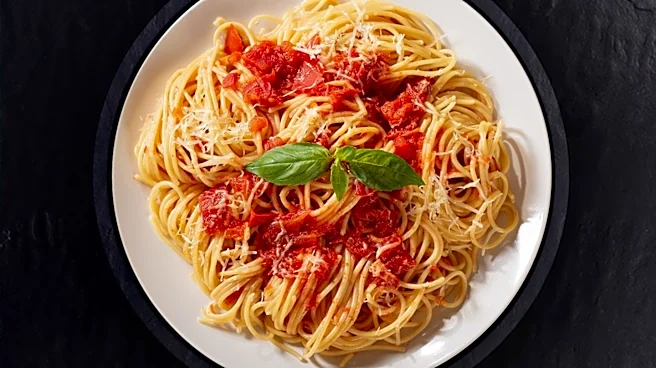
and desserts. Examples include Caprese Salad, Fresh Summer Tomato Bruschetta, Aquacotta Maremmana (One-Pot Tuscan Vegetable Soup), Pasta e Fagioli, Tuscan Pappa al Pomodoro, Quick and Easy Italian-American Red Sauce, Spaghetti All'Assassina, Spaghetti Aglio e Olio, Penne Alla Vodka, Pasta al Limone, Cacio e Pepe, Spaghetti Puttanesca, Penne With Hot-as-You-Dare Arrabbiata Sauce, Bucatini all'Amatriciana, Stracciatella alla Romana (Italian Egg Drop Soup), Pasta alla Gricia, Sicilian-Style Spaghetti Alla Carrettiera, Classic Italian-American Stuffed Shells With Ricotta and Spinach, Shrimp Fra Diavolo, Chicken Marsala, Fish Piccata, Sicilian-Style Baked Cod, and Affogato. The collection aims to provide convenient options for various situations, from late-night meals to feeding a hungry group without extensive grocery shopping.
Why It's Important?
This compilation of easy Italian recipes is important for U.S. households as it addresses a common challenge: the stress and time commitment associated with daily meal preparation. By offering a diverse selection of straightforward Italian dishes, Serious Eats provides practical solutions for individuals and families seeking to enjoy home-cooked meals without culinary complexity. The emphasis on readily available ingredients and simplified techniques can encourage more people to cook at home, potentially leading to healthier eating habits and cost savings compared to dining out or ordering takeout. The accessibility of these recipes also caters to varying skill levels in the kitchen, making Italian cuisine approachable for a broader audience and fostering a greater appreciation for diverse culinary traditions within American homes.
What's Next?
Consumers can access these recipes through Serious Eats to incorporate them into their meal planning. The availability of such resources may lead to an increase in home cooking, particularly of Italian dishes, as individuals seek convenient and flavorful options. Food bloggers and culinary websites may continue to feature and adapt these types of accessible recipe collections, responding to the ongoing demand for quick and easy meal solutions. This trend could also influence grocery stores to highlight ingredients commonly used in these recipes, potentially leading to promotions or dedicated sections for 'easy meal' components. Additionally, the popularity of these recipes might inspire further content creation focusing on simplified versions of other international cuisines.
Beyond the Headlines
The trend of simplifying traditional recipes, as exemplified by this collection, reflects a broader cultural shift towards convenience and efficiency in modern American life. In an increasingly busy society, the demand for quick yet satisfying meal solutions is high. This emphasis on 'easy' recipes can democratize cooking, making diverse cuisines like Italian more accessible to individuals who may lack extensive culinary training or time. However, it also raises questions about the potential impact on traditional culinary skills and the appreciation for more complex, time-intensive cooking methods. While convenience is a significant benefit, there's a delicate balance between simplifying recipes for broader appeal and preserving the authenticity and nuanced techniques that define traditional culinary arts. This collection highlights how food media adapts to contemporary lifestyles, offering practical solutions while navigating the evolving landscape of home cooking.