





What's Happening?
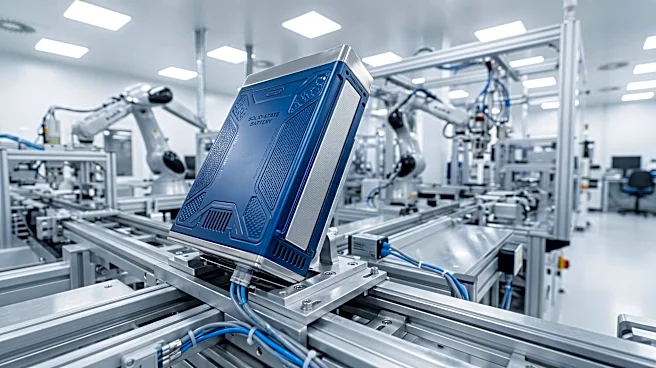
QuantumScape, a company specializing in solid-state battery technology, has inaugurated its highly automated Eagle Line pilot manufacturing facility in San Jose, California. This facility is now producing battery cells for customer testing. The company also
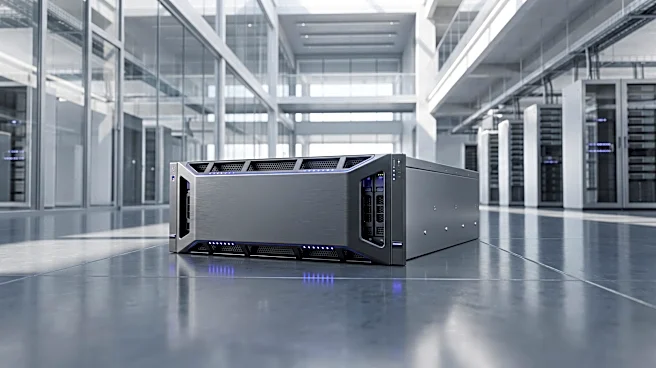
announced plans in October for a 100-megawatt-hour production line, with commercial production slated to begin in 2028. This new line will target applications in AI data centers, aerospace, and defense. Despite demonstrating impressive performance characteristics in laboratory settings, such as QSE-5 prototype cells achieving an energy density exceeding 844 watt-hours per liter and charging from 10% to 80% in 12.2 minutes, QuantumScape has not yet recognized any revenue. Since its inception in 2010, the company has accumulated a deficit of approximately $4.1 billion, highlighting the significant challenges in economically mass-producing these advanced batteries.
Why It's Important?
The commercialization of QuantumScape's solid-state battery technology could significantly impact various U.S. industries, particularly those requiring high-performance energy storage. The focus on AI data centers, aerospace, and defense applications suggests a strategic move towards sectors where customers may prioritize superior battery performance over cost, potentially offering a pathway to market entry outside the highly competitive automotive industry. If successful, this technology could lead to lighter, more energy-dense batteries that charge considerably faster than conventional lithium-ion batteries, offering a competitive advantage in these specialized markets. However, the company faces the substantial hurdle of scaling production without compromising quality or reliability, while also competing with the continuous advancements and cost reductions in traditional lithium-ion battery technology. The long development timeline and significant accumulated deficit underscore the high-risk, high-reward nature of this venture.
What's Next?
QuantumScape's immediate next steps involve increasing the volume of battery cells produced at its Eagle Line pilot facility for customer testing. The company is working towards its goal of initiating production at the 100-megawatt-hour line by 2028, targeting specific high-value markets. An automotive partnership with Honda is in place, while negotiations with Volkswagen's battery subsidiary, PowerCo, are ongoing, with milestone payments currently suspended. QuantumScape is also pursuing a capital-light licensing strategy, aiming to allow manufacturing partners to construct and operate battery factories using its technology, thereby generating royalties without massive capital expenditures. The success of this model hinges on partners' ability to manufacture the technology at a commercial scale. Investors and industry observers will be closely watching for progress in manufacturing yields, quality control, and the resolution of ongoing negotiations with key partners.
Beyond the Headlines
The journey of QuantumScape highlights a broader trend in the renewable energy sector: the immense capital and time required to bring groundbreaking technologies from laboratory to commercial viability. The company's struggle to transition from promising prototypes to profitable mass production underscores the 'valley of death' that many deep-tech startups face. The ethical implications of such long-term, high-investment ventures include the potential for significant shareholder dilution and the challenge of maintaining investor confidence over extended periods without revenue. Furthermore, the competition with continuously improving conventional lithium-ion batteries creates a dynamic environment where QuantumScape must not only perfect its technology but also ensure its cost-effectiveness and scalability to secure a meaningful market share. The success or failure of QuantumScape could serve as a critical case study for future innovations in energy storage, influencing investment strategies and policy support for advanced battery research and development.