





What's Happening?
Sleep experts and audiologists are recommending specific 'noise colors' such as white, pink, and brown noise to help individuals improve their sleep quality. These noise colors are analogous to light spectrums, with each containing different amounts of
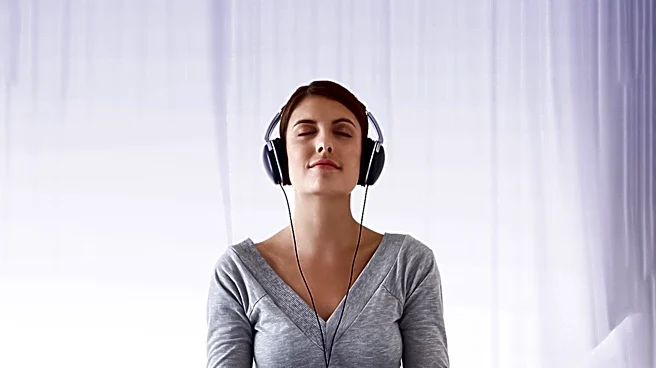
energy across various frequencies, influencing mental states uniquely. White noise, resembling a steady 'shhhh' or gentle waterfall, is effective in masking sudden sounds, particularly beneficial for those in noisy urban environments or individuals with ADHD. Pink noise, softer and more natural like rustling leaves or steady rainfall, has been shown to increase time spent in deep sleep. Brown noise, a deeper sound akin to a strong waterfall, is often preferred by insomniacs with racing thoughts. Experts emphasize that the volume should be just audible enough to be effective without causing arousal.
Why It's Important?
The growing recognition and recommendation of 'noise colors' for sleep highlight an evolving approach to addressing widespread sleep issues like insomnia, which affects 10-30% of adults. This trend offers a non-pharmacological intervention that can be easily integrated into daily routines, potentially reducing reliance on sleep aids like melatonin. For U.S. society, where sleep deprivation is a significant public health concern impacting productivity, mental health, and overall well-being, accessible tools like noise therapy could have a substantial positive impact. The differentiation between noise types allows for personalized solutions, catering to various sensitivities and sleep disturbances. This also opens new avenues for research into the relationship between sound, sleep, and memory, potentially leading to further advancements in sleep optimization and treatment strategies.
What's Next?
Further research is needed to determine the optimal settings and methods of stimulation for synchronized pink noise as a treatment, according to Roneil G. Malkani, MD, a neurologist and sleep medicine physician and scientist at Northwestern Medicine. This ongoing research aims to deepen the understanding of the link between sleep and memory and explore new avenues for sleep optimization. Consumers are advised to experiment with different noise colors to find what works best for them, often in conjunction with relaxation techniques, breathing exercises, and mindfulness. The continued development and refinement of these sound therapies could lead to more sophisticated and personalized sleep solutions, potentially integrated into smart home devices and health apps, making them even more accessible to a broader population seeking improved sleep.
Beyond the Headlines
The concept of 'noise colors' for sleep extends beyond simple sound masking, delving into the subtle psychological and physiological effects of different frequency distributions. This approach taps into the brain's response to auditory stimuli, suggesting a deeper interaction between sound and neural activity during sleep. The analogy to light spectrums provides an intuitive framework for understanding these complex acoustic properties. This trend also reflects a broader societal shift towards holistic and personalized health solutions, where individual preferences and unique physiological responses are considered. The integration of such therapies into daily life, often through readily available apps and devices, democratizes access to sleep improvement strategies, moving beyond traditional medical interventions. However, it also underscores the importance of evidence-based research to validate efficacy and ensure that these popular trends are genuinely beneficial and not merely fads.