





What's Happening?
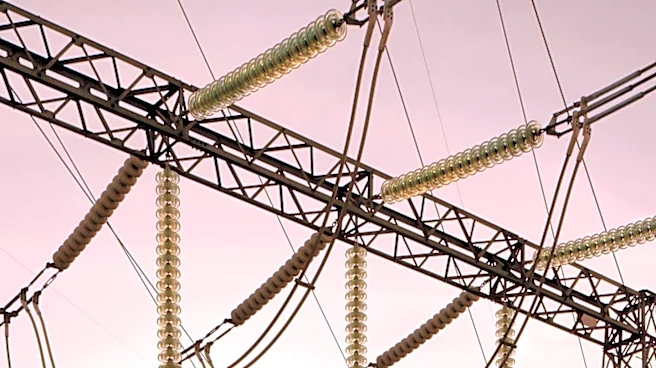
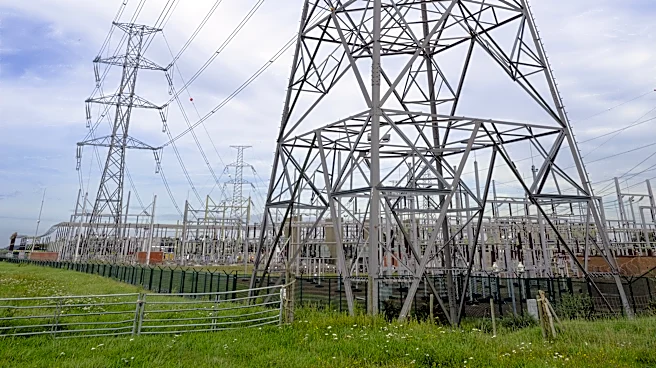
American Electric Power (AEP) has enlisted Jacobs and WSP to assist in its ambitious $37 billion transmission investment program, which aims to nearly triple the mileage of its 765-kilovolt (kV) transmission network over the next five years. This initiative
is part of an expanded $100 billion capital plan for 2027 through 2031, with transmission representing the largest share of this investment. Jacobs will manage AEP's eastern transmission portfolio across seven states, while WSP USA will handle the four-state western portfolio. The expansion is largely driven by a significant increase in contracted electricity demand, with AEP signing 15 gigawatts (GW) of new load commitments in the third quarter, and expecting incremental contracted load to reach 84 GW by 2031. A substantial 92% of this new demand is linked to data centers, including cryptocurrency customers.
Why It's Important?
AEP's massive $37 billion investment in its transmission network is critical for meeting the rapidly escalating electricity demand, particularly from data centers, and for enhancing the overall reliability and capacity of the U.S. power grid. As one of the nation's largest operators of 765-kV transmission lines, AEP's expansion will significantly bolster the infrastructure needed to deliver power across 11 states. This investment is vital for supporting economic growth, especially in the technology sector, which relies heavily on consistent and abundant electricity. The project will also improve grid resilience and flexibility, ensuring a more stable power supply for both industrial and residential customers. The involvement of major engineering firms like Jacobs and WSP underscores the complexity and scale of modernizing and expanding critical energy infrastructure to meet future demands.
What's Next?
Jacobs has already begun work on AEP's eastern transmission portfolio, with its scope including project management, engineering, siting, and environmental services. WSP's western assignment will cover similar areas, including planning, environmental review, and project delivery. A significant component of this expansion is the approximately $5 billion Piketon Area Improvements Project in Ohio, which will serve a planned 10.4 GW data center campus. Construction for this project is expected to commence in the first quarter of 2027, with three planned 765-kV transmission lines targeting in-service dates at the end of 2028, 2029, and 2030. AEP still requires approvals from regional transmission operator PJM, the Public Utilities Commission of Ohio, and the Federal Energy Regulatory Commission before the remaining transmission work can proceed. The customer for the Piketon project will cover costs through payments extending 20 years after each line enters service.
Beyond the Headlines
The substantial investment by AEP, largely driven by the demand from data centers, highlights a significant trend in U.S. energy consumption and infrastructure development. The concentration of demand from energy-intensive industries like data centers raises questions about the environmental footprint of the digital economy and the long-term implications for energy policy. This expansion could accelerate the integration of renewable energy sources into the grid, as new transmission lines can facilitate the delivery of power from remote generation sites. However, it also presents challenges related to land acquisition, environmental impact assessments, and regulatory approvals, which can be complex and time-consuming. The scale of this investment also underscores the need for robust public-private partnerships and innovative financing models to support the modernization of critical national infrastructure, ensuring both economic competitiveness and environmental sustainability.