



What's Happening?
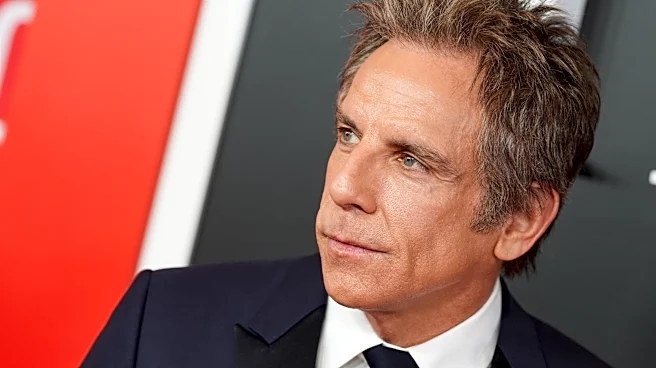
Actress Dakota Johnson is currently facing significant backlash on social media due to comments she made about NBA player OG Anunoby during a promotional interview. The incident occurred in October 2026, while Johnson was promoting the movie 'Verity'
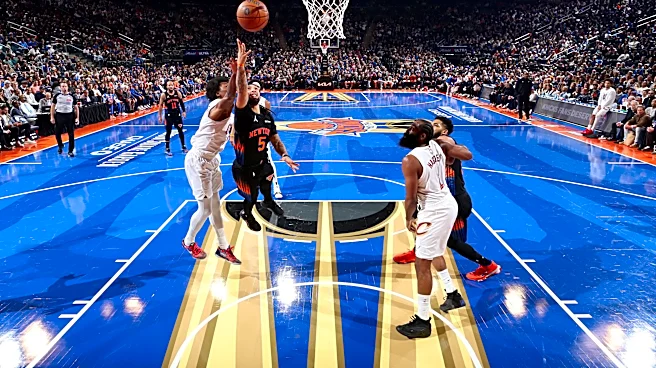
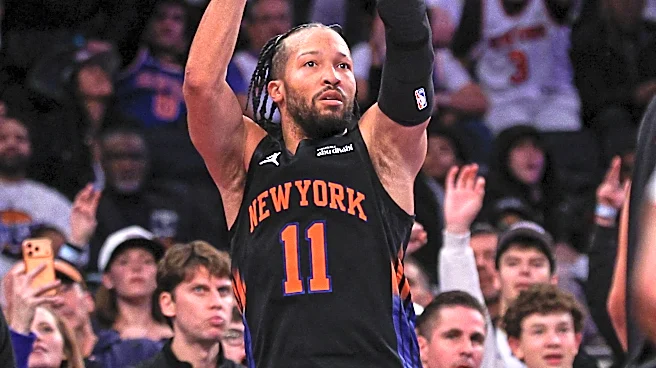
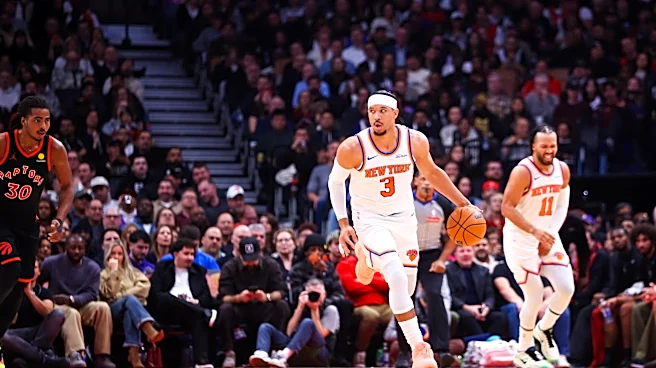
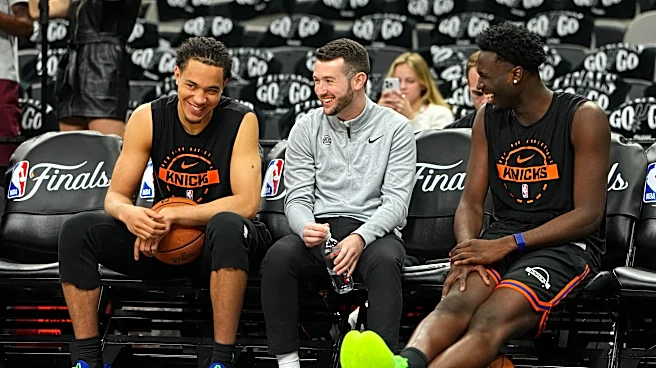
on 'Hot Ones Versus' alongside Anne Hathaway and Josh Hartnett. During a guessing game segment where participants had to identify individuals publicly linked to Hathaway, the name OG Anunoby appeared. Johnson reacted by questioning if Anunoby was a 'real person,' stating, 'That's not real,' and later asking, 'Is that a real person?' even after Hathaway, a New York Knicks fan, began explaining who he was. This reaction has led to widespread criticism online, with many social media users labeling her comments as 'mean' and insensitive, particularly given Anunoby's status as a two-time NBA champion for the New York Knicks. While some fans have defended Johnson, suggesting she was caught off guard or misunderstood, the criticism has persisted.
Why It's Important?
This incident highlights the broader implications of public figures' comments, especially concerning individuals from different cultural or professional backgrounds. The backlash against Dakota Johnson underscores the increasing scrutiny celebrities face in the digital age, where past remarks can resurface and ignite widespread debate. For public figures, it emphasizes the importance of cultural awareness and sensitivity, as seemingly innocuous comments can be perceived as dismissive or ignorant, leading to reputational damage. For the sports community, particularly NBA players like OG Anunoby, such incidents can bring unwanted attention and potentially diminish their professional recognition outside their immediate field. The online discourse also reflects societal expectations for empathy and respect in public interactions, regardless of familiarity with a person's name or profession. This event serves as a reminder of how quickly public sentiment can turn against celebrities for perceived missteps, impacting their public image and potentially their career.
What's Next?
The immediate aftermath will likely see continued discussion on social media regarding Dakota Johnson's comments and the broader topic of celebrity gaffes. Johnson, who has previously stated she avoids social media comments, may choose to remain silent, which could either allow the controversy to fade or intensify if critics perceive it as a lack of accountability. Alternatively, she might issue a statement or apology to address the backlash, which could help mitigate the negative public perception. The incident could also prompt further discussions within the entertainment industry about media training and cultural sensitivity for actors during promotional events. For OG Anunoby, the situation might inadvertently increase his public profile among those unfamiliar with basketball, though under less than ideal circumstances. The long-term impact on Johnson's career will depend on how the public and industry perceive her response, or lack thereof, to the ongoing criticism.
Beyond the Headlines
Beyond the immediate controversy, this event touches upon deeper societal issues related to cultural recognition and the perception of 'otherness.' Johnson's questioning of Anunoby's reality, despite his prominence in professional sports, can be interpreted as a reflection of a broader lack of awareness or interest in certain cultural spheres by some public figures. It also highlights the power dynamics inherent in celebrity culture, where a well-known actress's casual remark can overshadow the achievements of a successful athlete. The incident could spark conversations about the responsibility of public figures to be informed and respectful across diverse fields, rather than operating within a narrow cultural bubble. Furthermore, it underscores the role of social media as a powerful arbiter of public opinion, capable of holding individuals accountable for their words in ways that were less prevalent in previous eras, fostering a more critical and engaged audience.