







What's Happening?
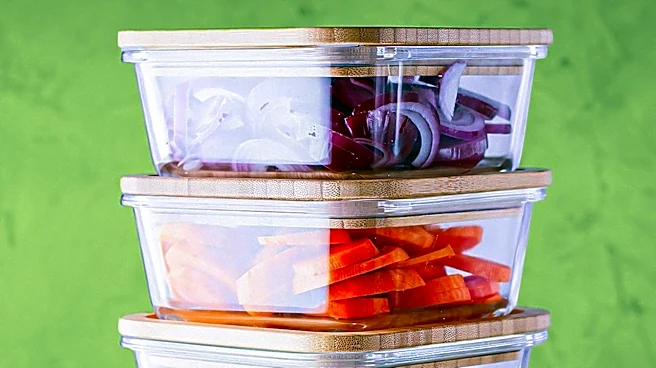
Rubbermaid, a prominent brand in food storage solutions, is expanding its Brilliance product line to incorporate Tritan Renew, a copolyester material developed by Eastman. This new material is made with certified recycled content, utilizing Eastman's
innovative recycling technology. The Rubbermaid Brilliance collection, initially launched in 2016 with legacy Tritan copolyester, is recognized for its premium performance, clarity, and durability. By integrating Tritan Renew into select food storage and pantry containers, Rubbermaid aims to offer products with recycled content while maintaining the expected quality, including stain, odor, and shatter resistance, along with the brand's patented leakproof and microwave-safe lid. This initiative reflects a continued collaboration between Rubbermaid and Eastman to advance material innovation in consumer products.
Why It's Important?
This development is significant for the U.S. consumer goods market and the broader circular economy. The adoption of Tritan Renew by a major brand like Rubbermaid signals a growing industry trend towards incorporating recycled materials into everyday products, responding to increasing consumer demand for sustainable options. For Eastman, this partnership validates its advanced recycling technologies and expands the market for its recycled content materials. This move can help reduce reliance on virgin plastics, decrease plastic waste, and lower the carbon footprint associated with product manufacturing. It also sets a benchmark for other companies in the food storage and housewares sectors, encouraging them to explore similar sustainable material innovations. Consumers stand to gain access to more environmentally conscious products without compromising on performance, potentially influencing purchasing decisions and fostering a more sustainable consumption culture.
What's Next?
The expansion of Rubbermaid Brilliance with Tritan Renew is likely to be followed by increased marketing efforts highlighting the sustainable aspects of these new products. This could include educational campaigns to inform consumers about the benefits of recycled content and Eastman's innovative recycling technology. Other brands in the consumer goods sector may observe the market reception of these products and potentially follow suit, leading to a broader adoption of similar recycled materials across various product categories. Eastman will likely continue to seek partnerships with other manufacturers to further scale its advanced recycling solutions. This initiative could also spur further research and development in material science to create even more sustainable and high-performance alternatives for consumer products, driving continuous innovation in the circular economy.
Beyond the Headlines
The integration of Tritan Renew into Rubbermaid products touches upon deeper implications for environmental policy, corporate responsibility, and consumer behavior. This move exemplifies how companies are navigating the complex landscape of sustainability, balancing product performance with ecological impact. It highlights the shift from traditional linear economic models to more circular ones, where materials are kept in use for longer. Ethically, it addresses concerns about plastic pollution and resource depletion, offering a tangible step towards more responsible manufacturing. Culturally, it reinforces the idea that sustainability can be a core value proposition for consumer products, influencing purchasing habits and raising awareness about the lifecycle of goods. This collaboration could also influence regulatory discussions around recycled content mandates and extended producer responsibility, as successful industry initiatives often inform future policy frameworks aimed at promoting a more sustainable future.